
What's Happening?
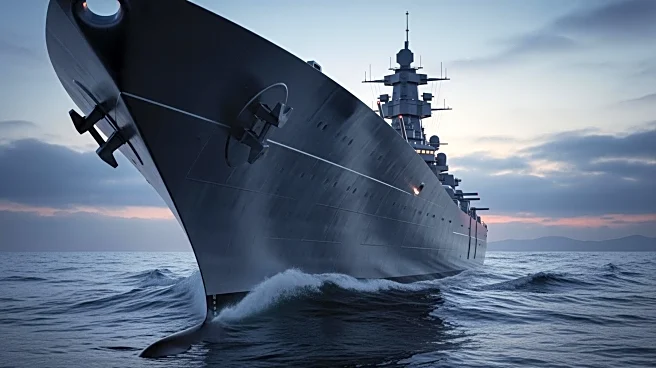
U.S. President Donald Trump has announced plans for the construction of two new 'Trump-Class' battleships, which are described as the largest and most powerful warships ever built. This announcement was
made during a press conference, highlighting a significant expansion in the U.S. Navy's capabilities amid global tensions. The battleships will feature advanced technologies such as railguns and laser close-in weapon systems. These ships are intended to be the first in a new class that will be produced over the coming years. The initiative is part of a broader effort to rebuild American industry and project power globally, with the ships serving as upgrades to the existing Arleigh Burke-class guided missile destroyers.
Why It's Important?
The construction of the 'Trump-Class' battleships represents a major investment in U.S. military capabilities, potentially enhancing the country's surface warfare lethality. This move aligns with President Trump's pledges to strengthen the military and could have significant implications for U.S. defense strategy and global military balance. The initiative is expected to bolster American industrial capacity and has been praised by supporters for enhancing national defense. However, it has also faced criticism from those who question the focus on military expansion amid pressing domestic priorities. The development of these battleships could influence U.S. foreign policy and military engagements, impacting international relations and defense alliances.
What's Next?
While no specific timeline or total cost for the construction of the battleships has been provided, the announcement sets the stage for future developments in U.S. naval capabilities. The naming of one ship as USS Defiant suggests a symbolic stance in projecting power. The initiative may prompt reactions from international stakeholders, potentially affecting diplomatic relations and military strategies. As the project progresses, further details on construction timelines, costs, and strategic deployment are anticipated. The broader implications for U.S. military policy and industrial strategy will likely be subjects of ongoing debate and analysis.