







What's Happening?
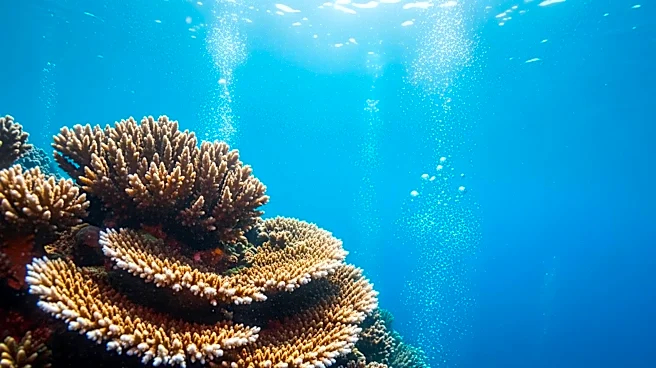
As global warming intensifies, tropical reef corals are experiencing widespread mortality due to extreme heatwaves. Corals depend on algae cells within their tissues for energy, which is crucial for building their skeletons and maintaining reef structures.
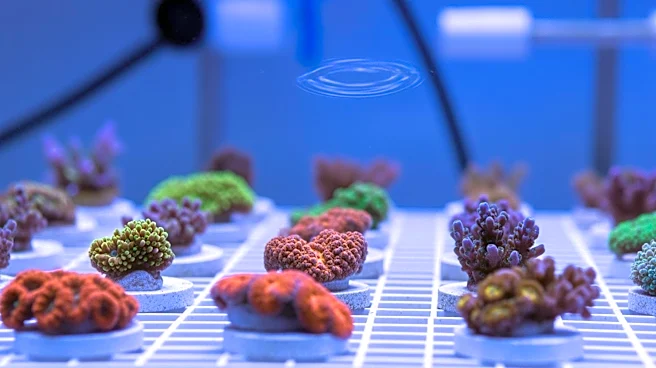
Scientists are now advocating for 'assisted evolution' to accelerate adaptation to heat stress. A recent study investigates selective breeding as a method to improve coral resilience against heatwaves. By examining genetic traits related to heat tolerance, growth, and reproduction, researchers aim to identify corals with the best potential for survival. The study focuses on a captive-bred coral population in Palau, utilizing quantitative genetics to understand complex traits influenced by numerous genes. This approach, commonly used in agriculture and animal breeding, could help maximize evolutionary responses to selection.
Why It's Important?
The survival of coral reefs is critical for marine biodiversity and the livelihoods of communities dependent on these ecosystems. Enhancing coral heatwave tolerance through selective breeding could mitigate the impacts of climate change on coral populations. This research provides a framework for identifying corals with genetic predispositions for heat tolerance, potentially improving future generations' resilience. The study highlights the importance of maintaining genetic diversity while implementing intense selection processes. Successful adaptation strategies could support coral reef conservation efforts, ensuring the persistence of these vital ecosystems amid rising global temperatures.
What's Next?
The study suggests that achieving significant gains in coral heatwave tolerance requires careful trait selection and sustained breeding efforts over multiple generations. Researchers emphasize the need for strategic management of local ecosystems, including conservation and assisted evolution, alongside reducing greenhouse gas emissions. Future research may focus on refining selection methods and scaling up breeding programs to maintain genetic diversity. Collaboration between scientists, reef managers, and policymakers will be crucial in implementing these strategies effectively.
Beyond the Headlines
The ethical implications of assisted evolution in coral reefs raise questions about human intervention in natural processes. While selective breeding offers a promising solution, it also challenges traditional conservation approaches that prioritize natural adaptation. Balancing intervention with ecosystem preservation requires careful consideration of long-term impacts on coral populations and marine biodiversity. This research underscores the need for innovative solutions to address climate change while respecting ecological integrity.