






What's Happening?
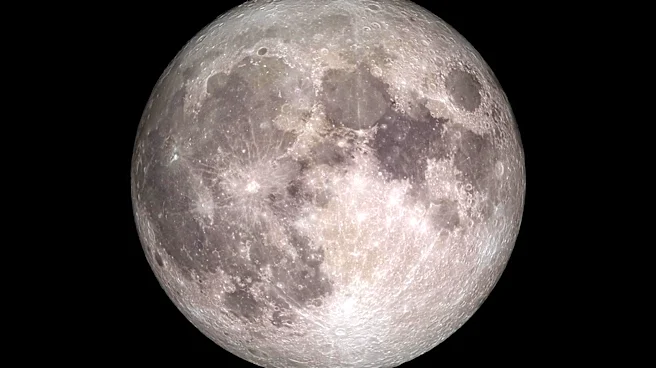
Astronomy Magazine provides an update on the celestial event occurring on July 24, 2026, where the Moon passes close to Antares, the bright red giant star in the constellation Scorpius. The Moon will be just 0.6 degrees south of Antares, creating a striking
visual in the southern sky after sunset. This event is part of a series of astronomical observations highlighted by the magazine, which also includes the end of Mercury's retrograde path. The article offers guidance on observing the Moon and Antares, noting that the Moon's movement relative to the stars can be tracked throughout the night.
Why It's Important?
The close proximity of the Moon to Antares provides a visually captivating event for both amateur and professional astronomers. Such events enhance public interest in astronomy and offer educational opportunities to learn about celestial navigation and the movement of astronomical bodies. Observing the Moon's path relative to Antares can also help in understanding the dynamics of the night sky and the relative positions of stars and planets. This event underscores the importance of celestial observations in fostering a deeper appreciation for the universe.
What's Next?
Observers are encouraged to track the Moon's movement as it distances itself from Antares throughout the night. This event serves as a precursor to other celestial phenomena, such as the upcoming meteor showers and planetary conjunctions. Astronomy enthusiasts and educators can use this opportunity to engage the public in discussions about the night sky and the science of astronomy. Future celestial events will continue to provide opportunities for observation and study, contributing to the ongoing exploration of our solar system and beyond.