





What's Happening?
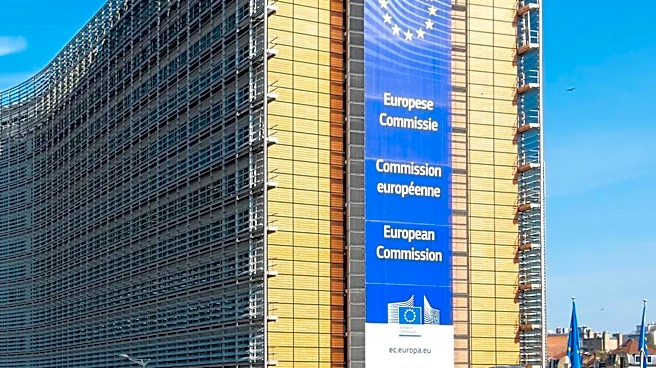
The European Commission has unveiled a new EU Framework for Climate Resilience, designed to bolster Europe's capacity to prepare for significant climate risks, including a potential 3°C rise above pre-industrial levels by 2100. This initiative, presented
by EC executive vice-president Teresa Ribera, aims to strengthen preparedness, clarify responsibilities, and equip public authorities, businesses, and communities with practical tools to act, with a particular focus on vulnerable populations. The framework integrates climate resilience across all major policy areas, both domestic and international, and supports local and regional authorities through pilot projects and advisory services. The Commission highlights the severe consequences of climate change, citing recent prolonged heatwaves, droughts, wildfires, and floods that have impacted people, businesses, and infrastructure across Europe. Estimated economic losses from climate damages between 2022 and 2025 are approximately €200 billion, or €50 billion per year.
Why It's Important?
This framework is crucial for Europe's long-term competitiveness, security, health, and prosperity. By proactively addressing climate risks, the EU aims to mitigate the escalating economic and social costs associated with extreme weather events. The initiative recognizes that 75% of Europeans residing in urban areas are already experiencing the direct impacts of climate change, underscoring the urgency of adaptation measures. The framework also presents a significant economic opportunity, as the global market for climate adaptation solutions is projected to quadruple to €3.5 trillion by 2050. This growth could position European businesses as leaders in climate resilience technology, fostering innovation and economic prosperity. Furthermore, the proposed Climate Resilience Law will provide a common reference trajectory for global warming, enabling Member States to assess future climate risks consistently and efficiently, thereby reducing administrative burdens and improving national planning.
What's Next?
The Framework Communication will embed climate resilience across all major policy areas, both domestically and internationally. It will provide support to local and regional authorities through pilot projects and advisory services. The Climate Resilience Law will simplify national planning obligations and instruments by introducing a single national strategic plan, ensuring improved and more regular climate risk assessments. The EU's 'Destination Earth' initiative will evolve to integrate supercomputing capabilities to aid in addressing these challenges. Tools like the Navigator of Climate Resilience Tools and the Solutions Explorer will assist users in finding relevant climate resilience solutions. The EU will also continue to push for more ambitious climate action globally, especially as it prepares for COP31, emphasizing the need for international commitments to limit global warming to 1.5°C and ensuring that climate action remains a financial priority in the next EU budget.
Beyond the Headlines
The EU's proactive stance on climate resilience reflects a deeper understanding of the systemic risks posed by climate change, moving beyond mere mitigation to comprehensive adaptation. This approach acknowledges that even with aggressive emissions reductions, some level of warming and its associated impacts are inevitable. The emphasis on integrating climate resilience into all policy areas signifies a fundamental shift in governance, where climate considerations are no longer siloed but are central to economic, social, and infrastructural planning. The projected growth in the climate adaptation market also highlights a new frontier for ethical investment and technological development, potentially fostering a 'green economy' that prioritizes sustainability alongside profitability. This framework could serve as a model for other regions grappling with similar challenges, demonstrating how a coordinated, multi-faceted approach can build societal robustness against future climate shocks.