



What's Happening?
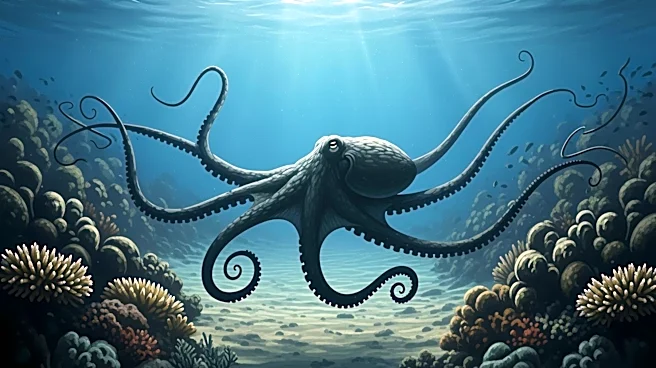
A new study has revealed the existence of a giant octopus species that lived during the Cretaceous period, challenging previous views of marine ecosystems dominated by vertebrates. Researchers discovered fossilized remains of these octopuses, which could
reach lengths of up to 19 meters, using a technique called Digital Fossil Mining. This method involves high-resolution grinding tomography to uncover fossils embedded in rock. The study suggests that these octopuses were apex predators, altering the understanding of the Cretaceous food web.
Why It's Important?
This discovery is significant as it reshapes the understanding of ancient marine ecosystems, highlighting the role of invertebrates as top predators. It challenges the long-held belief that vertebrates dominated the Cretaceous oceans, offering new insights into the evolutionary history of marine life. The findings could lead to a reevaluation of the ecological dynamics of the time, influencing current models of marine biodiversity and evolution.
Beyond the Headlines
The study's use of advanced imaging techniques to uncover soft-bodied fossils opens new avenues for paleontological research. It demonstrates the potential of technology to reveal hidden aspects of ancient life, which could lead to further discoveries about the diversity and complexity of prehistoric ecosystems. This approach may also inspire similar studies in other regions and time periods, expanding the understanding of Earth's biological history.