





What's Happening?
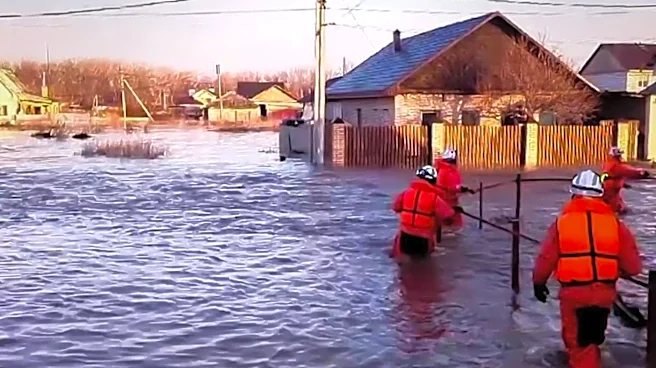
Oklahoma announced plans to send four swift-water rescue teams to New Mexico to assist with ongoing flooding, according to Governor Kevin Stitt’s office. This deployment, initiated on a Friday evening, includes 24 members of Oklahoma Task Force 1 from
the Tulsa and Oklahoma City areas. The teams are equipped with boats, trailers, and other essential rescue equipment. They were scheduled to stage in Santa Fe, New Mexico, for an assignment that could last up to seven days, depending on the severity of the flood conditions. New Mexico requested this assistance through the Emergency Management Assistance Compact (EMAC), a national system designed to facilitate the sharing of personnel and equipment between states during disaster situations. This particular deployment marks Oklahoma's seventh through EMAC this year, making it the most incidents the state has assisted with through the compact in a single year, supporting responses to six separate emergencies across Arkansas, Kansas, New Mexico, and Texas.
Why It's Important?
This interstate aid highlights the critical role of mutual assistance agreements like EMAC in national disaster response. Oklahoma's deployment of specialized swift-water rescue teams demonstrates a commitment to regional cooperation and collective resilience in the face of natural disasters. The ability of states to share resources and personnel through EMAC ensures that affected areas receive timely and specialized support, which can be crucial in saving lives and mitigating damage during emergencies such as severe flooding. For Oklahoma, this marks a significant year in terms of interstate assistance, showcasing its capacity and willingness to contribute to broader national emergency efforts. This collaboration not only strengthens inter-state relationships but also enhances the overall effectiveness of disaster management across the U.S., ensuring that no single state is left to manage overwhelming crises alone. The deployment underscores the increasing frequency and intensity of weather-related events, necessitating robust and coordinated emergency response mechanisms.
What's Next?
The Oklahoma swift-water rescue teams will remain deployed in Santa Fe, New Mexico, for up to seven days, or as long as flood conditions necessitate their assistance. Their primary mission will be to conduct rescue operations and provide support to New Mexico's emergency services. Following their assignment, the teams will return to Oklahoma, and a review of their deployment and effectiveness will likely be conducted. The continued use of the Emergency Management Assistance Compact (EMAC) by states like Oklahoma suggests that such inter-state aid will remain a vital component of national disaster response strategies. As climate patterns continue to evolve, leading to more frequent and intense weather events, the demand for and reliance on these mutual aid systems are expected to grow, prompting ongoing coordination and resource sharing among states.
Beyond the Headlines
The repeated activation of the Emergency Management Assistance Compact (EMAC) by Oklahoma this year, reaching a record seven deployments, points to a broader trend of increasing natural disaster frequency and severity across the United States. This surge in mutual aid requests underscores the growing strain on individual state resources and highlights the necessity of robust national frameworks for disaster response. Beyond the immediate humanitarian impact, these deployments foster a sense of national solidarity and shared responsibility, reinforcing the idea that states are interconnected in their vulnerability and resilience. The specialized nature of swift-water rescue teams also emphasizes the need for highly trained and equipped emergency personnel, suggesting potential future investments in specialized disaster response capabilities at both state and federal levels. This ongoing pattern of inter-state assistance could also influence policy discussions around climate change adaptation and disaster preparedness funding.