



What's Happening?
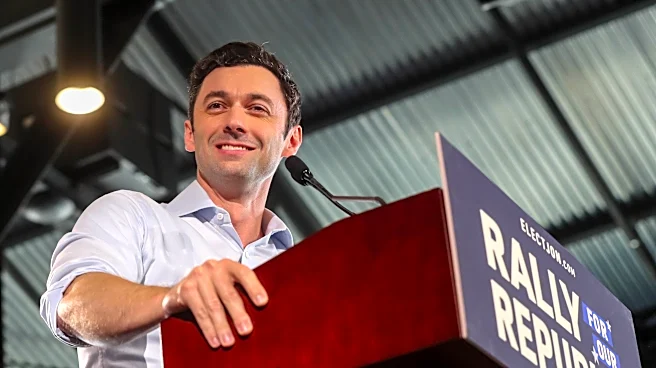
House Majority Leader Steve Scalise has actively campaigned for Brinker Harding in Nebraska's 2nd Congressional District, emphasizing the national importance of the race. Scalise described the contest as one of the most crucial in the country. Harding,
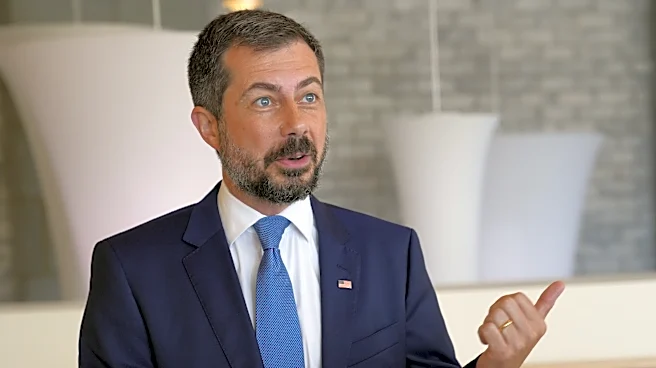
an Omaha City Councilmember, is running against Democratic activist Denise Powell for the open seat previously held by retiring Rep. Don Bacon. The district is notable for having supported Democratic presidential nominee Kamala Harris in the last election while simultaneously sending a Republican to Congress. Harding has also received endorsements from President Trump and House Speaker Mike Johnson, indicating significant Republican party support. Conversely, Powell has campaigned with prominent Democratic figures like former Transportation Secretary Pete Buttigieg and Rahm Emanuel, highlighting the district's swing voter potential.
Why It's Important?
The Nebraska 2nd Congressional District race is considered a bellwether for national political trends, particularly given its unique voting pattern of supporting a Democratic presidential candidate while electing a Republican to the House. The involvement of high-profile national figures from both parties, such as Steve Scalise, President Trump, Mike Johnson, Pete Buttigieg, and Rahm Emanuel, underscores the strategic importance of this district in the broader struggle for congressional control. A victory for Harding would solidify Republican influence in a competitive area, while a win for Powell could signal a shift in voter sentiment and provide Democrats with a crucial gain. The outcome will be closely watched as it could offer insights into the effectiveness of national party messaging and candidate endorsements in swing districts, potentially influencing campaign strategies for future elections.
What's Next?
As the election approaches, both Brinker Harding and Denise Powell are expected to intensify their campaign efforts, focusing on local issues such as affordability while also leveraging their national party support. The district's voters will continue to be courted by both sides, with an emphasis on appealing to swing voters who have demonstrated a willingness to split their tickets. The Republican National Committee views President Trump as a key asset for motivating the base in a non-presidential election year, and his continued involvement in tightly contested districts, including through events like the upcoming Republican midterm convention in Dallas, will likely play a role. The outcome of this race will determine whether the district continues its pattern of split-ticket voting or aligns more consistently with one party, potentially influencing the balance of power in the House of Representatives.
Beyond the Headlines
The Nebraska 2nd Congressional District race highlights a deeper national political dynamic: the increasing polarization of the electorate versus the enduring influence of local issues and candidate appeal. While national figures and party endorsements are significant, the candidates' ability to connect with voters on local concerns like affordability, as noted by both Harding and Powell, remains crucial. The district's 'blue dot' status within a predominantly red state also reflects the complex interplay of urban and suburban demographics in shaping electoral outcomes. This race could serve as a case study for how national political narratives, such as those surrounding President Trump, interact with local voter sentiment and the desire for checks and balances, potentially revealing evolving trends in American political identity and voting behavior.