



What's Happening?
Washington Lands Commissioner Dave Upthegrove is advocating for alternative funding methods for the Department of Natural Resources (DNR) to reduce reliance on timber sales. Upthegrove, who previously pledged to conserve 77,000 acres of timberland in Western
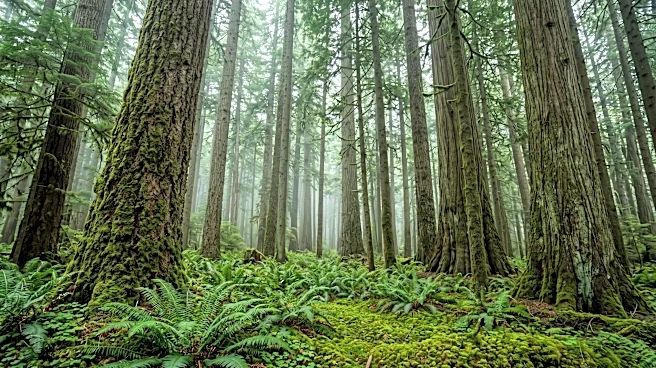
Washington (later refined to 55,000 acres), acknowledged that this pledge was unrealistic under current laws, as timber sales are crucial for funding the DNR. He stated that the department is currently losing money due to flat management fees for 12 years and declining timber sale prices, while inflation has increased costs. Upthegrove plans to ask the Board of Natural Resources for permission to lease forests to tribes, public entities, and environmental groups. Additionally, he seeks legislative approval for the DNR to sell "ecosystem services," such as carbon storage, to generate revenue. He emphasized that without these new authorities, the 55,000 acres currently set aside for conservation might need to be included in future harvest plans to fund the department.
Why It's Important?
This initiative by Commissioner Upthegrove highlights a significant shift in how forest resources in Washington State could be valued and managed. Moving away from a sole reliance on timber sales for funding the DNR could have profound implications for both environmental conservation and the state's economy. By exploring options like leasing forests for conservation and selling carbon storage, Washington could set a precedent for other states seeking to balance economic needs with ecological preservation. This approach could create new revenue streams for the state, potentially stabilizing the DNR's budget while simultaneously addressing climate change and protecting biodiversity. However, it also presents challenges, as the American Forest Resource Council estimates that lower timber sales have already cost rural agencies $50 million and the DNR $20 million, indicating potential economic impacts on communities reliant on the timber industry. The success of these alternative funding models will determine the future of forest management and conservation efforts in the region.
What's Next?
Commissioner Upthegrove will present his proposals to the Board of Natural Resources, seeking permission to implement new strategies such as leasing forests for conservation and selling ecosystem services. Concurrently, he will engage with legislators to secure the necessary legal authority for the DNR to pursue these alternative revenue streams. The outcome of these discussions will determine whether the 55,000 acres of timberland currently earmarked for conservation can remain protected or if they will be opened up for logging to meet the department's financial needs. Stakeholders, including the American Forest Resource Council and the Washington Forest Protection Association, are likely to closely monitor these developments, given their concerns about the financial impact of reduced timber sales. The process will involve navigating existing regulations and potentially enacting new legislation to enable the DNR to diversify its funding sources and prioritize forest values beyond timber.
Beyond the Headlines
The debate over funding the Washington DNR through means other than logging touches upon deeper ethical and cultural dimensions regarding the intrinsic value of forests. Traditionally, forests have been viewed primarily as a source of timber, contributing to economic growth and supporting rural communities. However, Upthegrove's proposal suggests a paradigm shift towards recognizing forests for their broader ecological services, such as carbon sequestration, habitat provision, and water protection. This move reflects a growing societal awareness of climate change and biodiversity loss, prompting a re-evaluation of how natural resources are managed. The challenge lies in translating these ecological values into tangible economic benefits that can sustain government departments and support local economies. If successful, this initiative could foster a new model of sustainable forestry that integrates conservation with economic viability, potentially influencing national land management policies and promoting a more holistic approach to environmental stewardship.