





What's Happening?
President Trump announced an expansion of the Ratepayer Protection Pledge, aimed at ensuring data center developers cover their own utility costs rather than passing them onto consumers. The pledge, signed by key utility companies and 23 governors, addresses
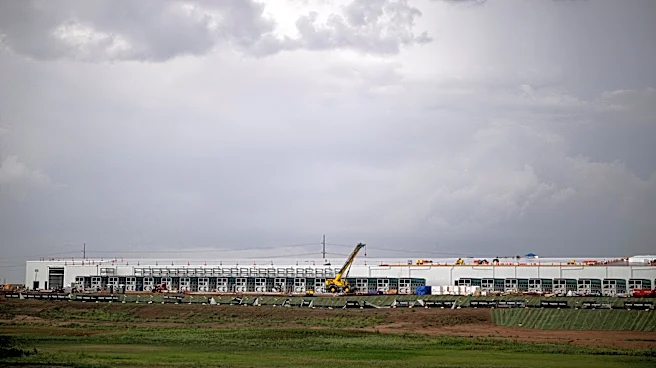
concerns over rising energy costs due to the construction of data centers across the U.S. The initiative seeks to mitigate public backlash against data centers, which are projected to use up to 12% of U.S. electricity by 2030. The pledge is part of a broader strategy to support the growth of AI data centers while ensuring economic benefits for local communities.
Why It's Important?
The expansion of consumer protections is significant as it addresses growing concerns over the impact of data centers on electricity costs for American families. By holding developers accountable for their energy usage, the initiative aims to prevent steep increases in utility bills, which have been a source of public discontent. This move also supports the development of AI infrastructure, which is crucial for maintaining U.S. competitiveness in the tech industry. Ensuring that data centers contribute to local economies without burdening residents is essential for sustainable growth in the sector.
What's Next?
The pledge's expansion may lead to increased collaboration between state governments, utility companies, and tech developers to build more efficient energy infrastructure. As more power plants are constructed, electricity bills for American families are expected to decrease. However, opposition remains, with some states, like New York, imposing temporary bans on data center construction. The ongoing debate over the environmental and economic impact of data centers will likely continue, influencing future policy decisions and industry practices.