






What's Happening?
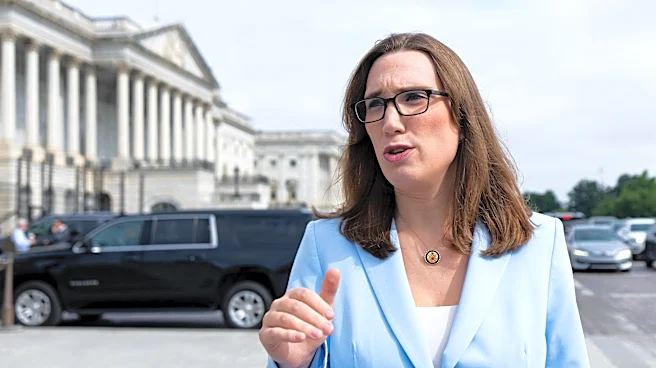
Rep. Sarah McBride (D-Del.) has sponsored the READ AI Models Act, a legislative initiative aimed at directing the National Institute of Standards and Technology (NIST) to develop standardized templates and technical guidance for documenting Artificial
Intelligence (AI) models and their associated data. This proposed act is part of a broader push for increased federal and state legislative activity concerning AI, particularly following the 2026 midterm elections. The bill seeks to establish clear guidelines for AI model documentation, which is crucial for transparency, accountability, and risk management in the rapidly evolving field of AI. This effort aligns with other legislative proposals, such as the Federal Artificial Intelligence Risk Management Act of 2026, which would require federal agencies to use the NIST AI Risk Management Framework.
Why It's Important?
The READ AI Models Act is significant because it addresses a critical need for standardization in AI development and deployment. As AI technologies become more pervasive across various sectors, the lack of consistent documentation can lead to issues in understanding model behavior, identifying biases, and ensuring responsible use. Standardized templates and technical guidance from NIST would provide a common framework for developers and deployers, enhancing transparency and facilitating better oversight. This initiative could help mitigate risks associated with AI, such as algorithmic discrimination, and promote public trust in AI systems. For companies, aligning with NIST standards could become a practical compliance benchmark, potentially reducing tort liability by providing a clear definition of 'reasonableness' in AI practices.
What's Next?
The READ AI Models Act will likely undergo legislative review and debate in Congress. Its passage would mandate NIST to develop the specified documentation standards, which would then influence AI development practices across industries. Companies developing or deploying AI models would need to adapt their internal processes to comply with these new guidelines, potentially requiring investments in new tools and training for their teams. Furthermore, the act could serve as a model for other states or even international bodies looking to regulate AI documentation. The ongoing discussion around AI governance suggests that more legislation, both federal and state, will continue to emerge, focusing on areas like frontier model safety, incident reporting, and children's safety on chatbots.
Beyond the Headlines
Beyond its immediate regulatory impact, the READ AI Models Act touches upon fundamental ethical and societal implications of AI. By promoting transparent documentation, the act implicitly supports the principle of 'explainable AI,' where the decision-making processes of AI systems are understandable to humans. This is crucial for addressing issues of fairness, accountability, and potential misuse of AI. The standardization could also foster greater collaboration and interoperability within the AI community, as developers would have a common language for describing their models. Ultimately, this legislation could contribute to a more responsible and trustworthy AI ecosystem, shaping how future AI technologies are developed, deployed, and integrated into society.