




What's Happening?
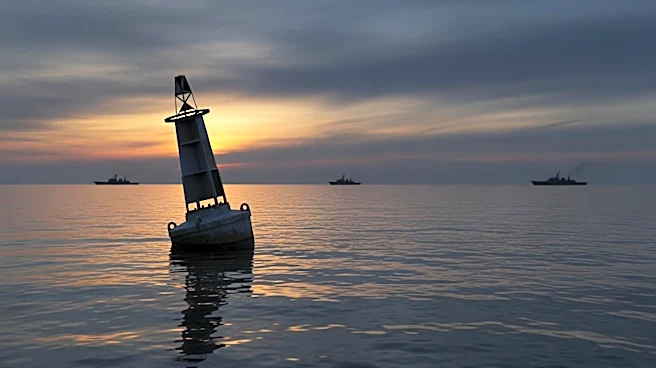
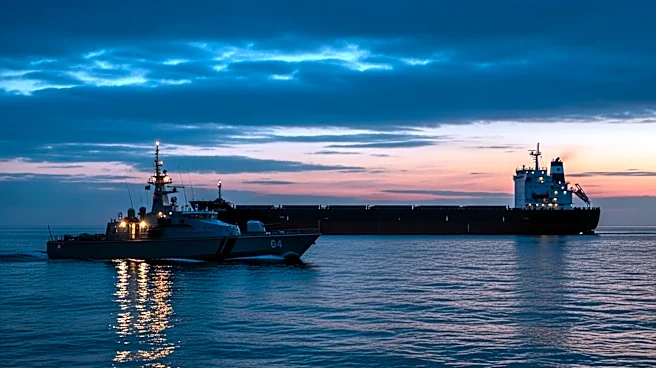
The Islamic Revolutionary Guards Corps (IRGC) of Iran has seized two vessels in the Strait of Hormuz, escalating tensions in the region. The IRGC redirected the Liberian-flagged Epaminondas and the Panamanian-flagged MSC Francesca towards Iranian waters,
inflicting damage on both ships. This move is seen as an attempt to enforce Iranian sovereignty claims and disrupt global shipping. The IRGC's actions follow the U.S. Navy's seizure of an Iranian-flagged vessel, Touska, in the Gulf of Oman. The IRGC's aggressive stance is part of a broader strategy to extract concessions from the U.S., including lifting the blockade over the Strait of Hormuz.
Why It's Important?
The IRGC's seizure of vessels in the Strait of Hormuz highlights the strategic importance of this waterway, through which a significant portion of the world's oil supply passes. Iran's actions could lead to increased shipping costs and global oil price volatility. The IRGC's willingness to risk a U.S. military response indicates a high-stakes gamble to assert control over the strait and influence negotiations. The internal fragmentation within Iran's leadership complicates diplomatic efforts, as different factions vie for control over the country's foreign policy direction.
What's Next?
The U.S. and its allies may need to respond to Iran's provocations to ensure the security of international shipping lanes. Diplomatic efforts to resolve the standoff are likely to continue, but the lack of a unified Iranian negotiating position poses challenges. The potential for military escalation remains, as both sides assess their strategic options. The international community will be watching closely for any developments that could impact global oil markets and regional stability.