






What's Happening?
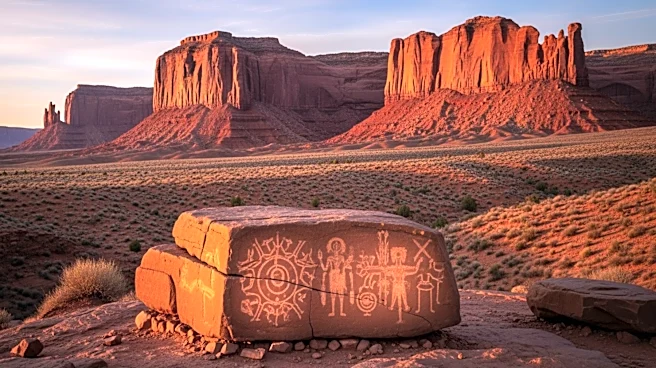
The Apache Stronghold, an Indigenous coalition, is persisting in its legal efforts to protect Oak Flat, a sacred site in Arizona, from copper mining development. Despite the U.S. Supreme Court's decision not to hear their case and the land transfer to Resolution
Copper, the coalition is pursuing four active lawsuits. Oak Flat, listed on the National Register of Historic Places, is threatened by mining activities authorized by Congress in 2014. The coalition argues that the mining project violates the Religious Freedom Restoration Act, which protects religious practices from substantial government burdens. The case has garnered support from various religious organizations, highlighting its implications for religious freedom.
Why It's Important?
The ongoing legal battle underscores the tension between economic development and the protection of Indigenous sacred sites. The outcome of this case could set a precedent for how religious freedom is interpreted in the context of land use and development. For Native American communities, the case represents a broader struggle for the preservation of cultural and religious heritage. The involvement of diverse religious groups indicates a shared concern over potential erosion of religious liberties, which could affect various faith communities across the U.S.
What's Next?
The legal proceedings in the 9th Circuit and District Court will continue to unfold, with potential implications for the mining project and religious freedom jurisprudence. The Apache Stronghold and its supporters are likely to maintain advocacy efforts, seeking to influence public opinion and policy. The case may also prompt legislative discussions on balancing economic interests with the protection of sacred sites and religious rights.