


What's Happening?
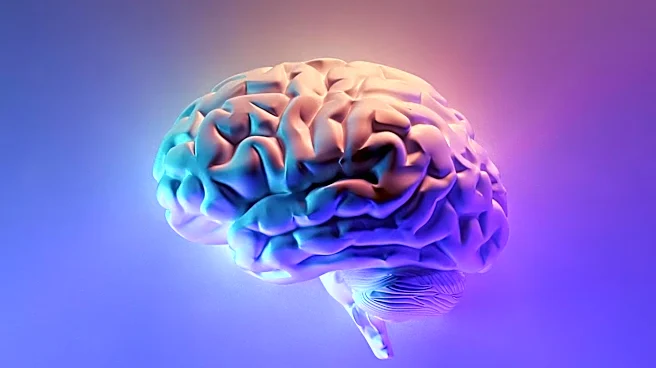
Researchers at the Korea Advanced Institute of Science and Technology (KAIST) have discovered a new mechanism by which immune checkpoint inhibitors can be more effective against brain tumors, specifically glioblastoma. The study found that B-cell and antibody
responses in lymph nodes, rather than T-cells alone, are crucial for the antitumor effects of anti-CTLA-4 therapy. This discovery challenges the traditional T-cell-centered view of cancer immunotherapy. In mouse models, the treatment reduced tumor burden and prolonged survival, but these effects were diminished in mice lacking B-cells. The research highlights the importance of B-cells in the immune response to brain tumors, suggesting a new pathway for treatment.
Why It's Important?
This discovery is significant as it opens up new avenues for treating glioblastoma, one of the most aggressive and difficult-to-treat brain tumors. Current treatments have limited effectiveness due to the immunosuppressive environment of these tumors. By understanding the role of B-cells in the immune response, researchers can develop more effective therapies that enhance the body's ability to fight cancer. This could lead to improved outcomes for patients with glioblastoma and potentially other brain tumors, offering hope for a condition with a historically poor prognosis.
What's Next?
Further research is needed to translate these findings from mouse models to human treatments. This includes safety and efficacy testing in human trials. The study suggests that enhancing B-cell responses could be a key strategy in developing new immunotherapies for brain tumors. Researchers will likely explore how these findings can be integrated into existing treatment protocols and whether similar mechanisms are present in other types of cancer.