






What's Happening?
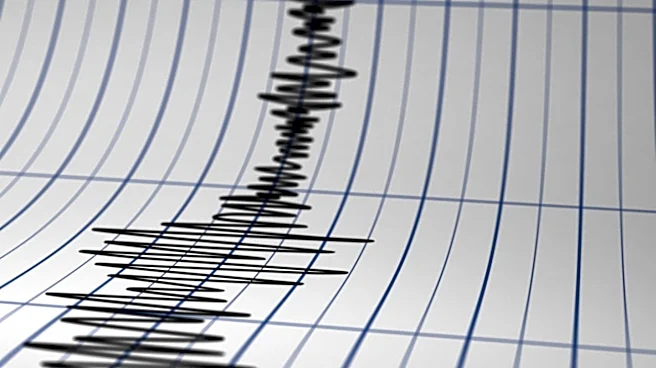
A magnitude 5.6 earthquake occurred early Thursday morning in a remote part of Interior Alaska, approximately 27 miles north of Lake Minchumina. The United States Geological Survey (USGS) reported the quake struck just after 3 a.m. local time at a relatively
shallow depth of less than 3 miles below the surface. Lake Minchumina is a community with a population of 30 people, located about 90 miles west of Denali National Park. Alaska is recognized as one of the most seismically active states in the U.S., with Interior Alaska being traversed by the active Denali fault system. Furthermore, a significant portion of southern Alaska is situated along the Pacific Ring of Fire, a vast 25,000-mile belt of volcanoes and earthquake zones that accounts for 90% of the world's earthquakes.
Why It's Important?
This earthquake underscores the persistent seismic activity in Alaska and its connection to the Pacific Ring of Fire. The region's high seismic activity necessitates robust infrastructure and emergency preparedness measures, particularly in remote areas where response times can be challenging. While this specific quake was in a sparsely populated area, the underlying geological forces are a constant factor for communities and industries across Alaska. Understanding the dynamics of the Pacific Ring of Fire is crucial for assessing risks to critical infrastructure, such as oil and gas pipelines, transportation routes, and communication networks, which are vital for the state's economy and national interests. The event serves as a reminder of the ongoing geological processes that shape the U.S. landscape and pose potential hazards.
What's Next?
Authorities will continue to monitor for aftershocks in the region, although the remote nature of the affected area means immediate impacts on human populations are likely minimal. Geologists and seismologists will analyze data from this event to further understand the Denali fault system and its interaction with the broader Pacific Ring of Fire. For residents and infrastructure in Alaska, ongoing preparedness for seismic events remains a priority. This includes maintaining earthquake-resistant building codes and ensuring emergency services are equipped to respond to potential future, more significant seismic activity. Public awareness campaigns about earthquake safety are also likely to continue, reinforcing the importance of readiness in a seismically active state.
Beyond the Headlines
The occurrence of this earthquake highlights the broader scientific efforts to understand and predict seismic events within the Pacific Ring of Fire. This region is a hotbed of geological research, with scientists continuously working to improve early warning systems and hazard assessments. The data collected from events like this contribute to a global understanding of plate tectonics and earthquake mechanics. For the U.S., particularly Alaska, the long-term implications involve balancing economic development, such as resource extraction and tourism, with the inherent risks of living in an active seismic zone. This ongoing challenge requires continuous investment in scientific research, infrastructure resilience, and community education to mitigate potential disasters and ensure long-term safety and sustainability.