



What's Happening?
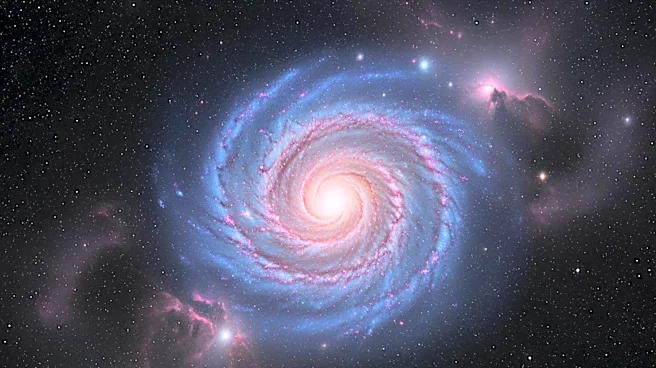
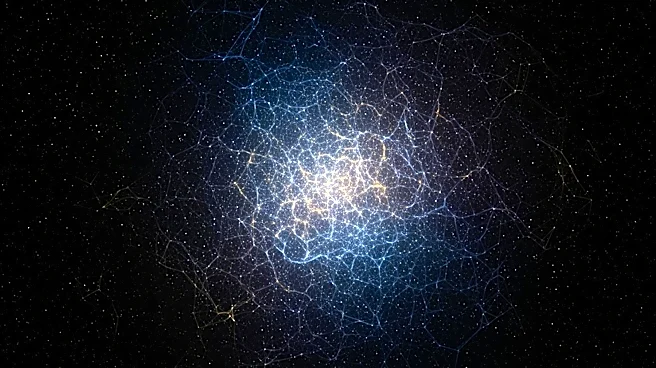
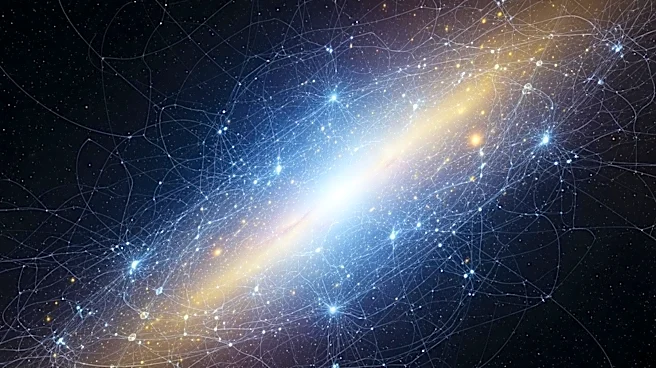
Astrophysicists are delving into the varying densities found in different regions of space, from interstellar gas clouds to intergalactic voids. These studies reveal that while space is often perceived as empty, it contains varying densities of particles,
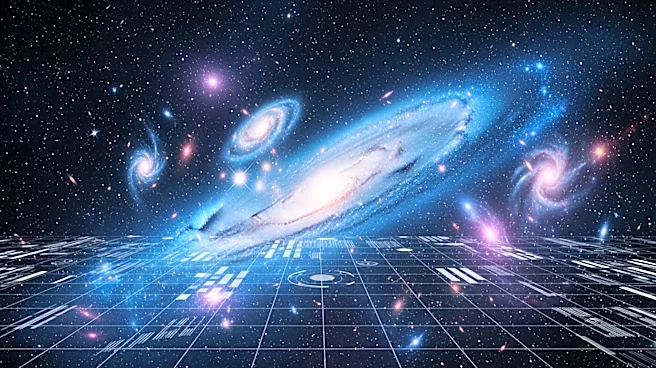
with intergalactic space being the sparsest. The research highlights how denser regions, such as star clusters and galaxies, have formed by attracting matter over billions of years, leaving behind less dense cosmic voids. This exploration helps in understanding the cosmic struggle between expansion and gravitation, where denser regions are seen as 'winners' in this cosmic evolution.
Why It's Important?
Understanding the density variations in space is crucial for comprehending the formation and evolution of cosmic structures. These insights can impact our knowledge of how galaxies and star systems form and evolve. The findings also have implications for future space exploration and the search for extraterrestrial life, as they provide a clearer picture of the environments that spacecraft might encounter. Additionally, this research can influence theoretical models of the universe, potentially leading to new discoveries about the fundamental forces and particles that govern cosmic phenomena.