






What's Happening?
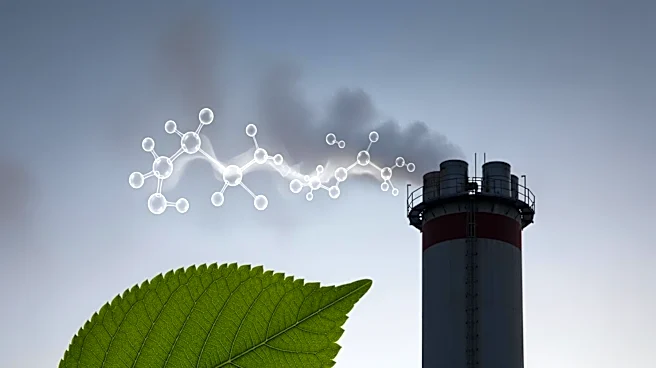
Bioenergy with carbon capture and storage (BECCS) is facing significant challenges as a viable solution for climate change mitigation. Initially proposed as a method to reduce atmospheric CO2 by capturing emissions from biomass energy production, BECCS has
not been implemented on the necessary scale. The technology is criticized for being prohibitively expensive, potentially harmful to biodiversity, and ineffective in reducing emissions in the short term. The Drax Power Station in the UK, once a flagship project for BECCS, has halted its carbon capture plans, highlighting the difficulties in deploying this technology.
Why It's Important?
The challenges facing BECCS underscore the complexities of implementing large-scale carbon reduction technologies. The failure to roll out BECCS as planned raises concerns about the reliance on unproven technologies in climate models and policy frameworks. This situation highlights the need for alternative strategies, such as accelerating the adoption of renewable energy sources like wind and solar, to meet climate goals. The financial and environmental costs associated with BECCS also prompt a reevaluation of resource allocation in climate change mitigation efforts.
Beyond the Headlines
The limitations of BECCS reveal deeper issues in the global approach to climate change. The reliance on theoretical solutions that have not been practically tested could delay effective action. Additionally, the focus on BECCS may divert attention and resources from more immediate and proven methods of reducing emissions. This situation calls for a reassessment of climate strategies, emphasizing the importance of practical, scalable solutions that can deliver tangible results in the near term.