



What's Happening?
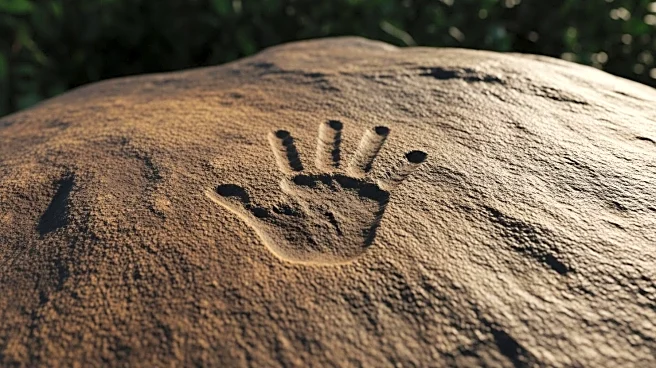
A handprint discovered in the Liang Metanduno cave on Muna Island, Indonesia, has been dated to at least 67,800 years ago, making it one of the oldest known pieces of cave art. This discovery was made using uranium-series analysis on calcium carbonate
deposits surrounding the handprint. The age of this handprint surpasses that of similar ancient artworks found in other parts of Indonesia and even a Neanderthal hand stencil in Spain, which was previously considered the oldest. The handprint's unique shape, with extended and tapered fingers, suggests it may have been created by Homo sapiens, indicating advanced cognitive abilities. This finding has significant implications for understanding the timeline of human migration, particularly the movement of early humans through Indonesia to Australia.
Why It's Important?
The discovery of this ancient handprint is crucial as it potentially revises the timeline of human migration in Southeast Asia. Previously, it was believed that the first human settlers reached Australia via Indonesia between 50,000 and 65,000 years ago. However, the existence of this handprint suggests that human presence in the region could date back even further. This challenges existing theories about the spread of Homo sapiens and their cognitive development. The implications extend beyond archaeology, affecting our understanding of human history and the development of art and culture. It also highlights the importance of Indonesia as a key region in the study of early human migration and cultural evolution.
What's Next?
Further research and exploration in the region could uncover more ancient artworks, providing additional insights into early human life and migration patterns. Archaeologists may focus on other caves in Indonesia to find similar evidence that could corroborate or refine the current understanding of human history. This discovery may also prompt a reevaluation of migration timelines in other parts of the world, as researchers seek to understand the broader implications of early human movement and cultural development.
Beyond the Headlines
The discovery raises questions about the cognitive abilities of early humans and their capacity for symbolic thought, as evidenced by the deliberate modification of the handprint's shape. This could lead to a deeper exploration of the cultural and artistic expressions of early Homo sapiens, offering a richer understanding of their social and spiritual lives. Additionally, it underscores the importance of preserving archaeological sites, as they hold the key to unlocking the mysteries of human history.