
What's Happening?
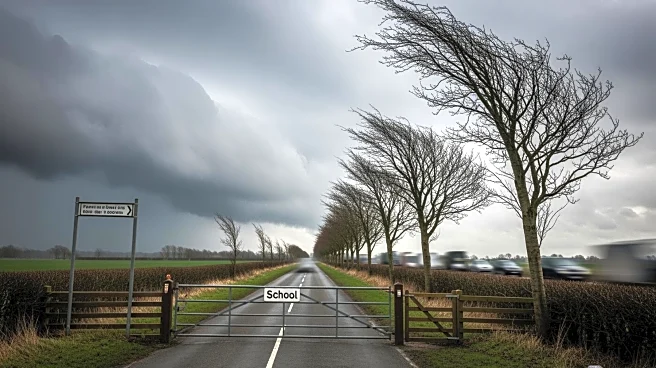
A severe cold snap in Northern Ireland has led to significant disruptions, including the closure of over 200 schools and impacts on transportation services. The Met Office has issued a yellow weather warning
for ice, which is expected to continue affecting the region. Roads in County Fermanagh have been deemed impassable due to icy conditions, and several bus services have been disrupted. Additionally, bin collections and cemetery operations in Derry and Strabane have been suspended. The cold weather has also affected local farmers, who are struggling to care for their livestock. The situation has prompted local authorities to urge caution on untreated roads and footpaths.
Why It's Important?
The ongoing severe weather in Northern Ireland highlights the challenges faced by communities in maintaining daily operations during extreme conditions. School closures impact not only education but also working parents who must find alternative childcare solutions. The disruption of transportation services affects commuters and the delivery of essential services. The situation underscores the importance of effective emergency response and infrastructure resilience in the face of adverse weather. It also raises concerns about the safety and well-being of vulnerable populations, such as the elderly, who may require additional support during such events.
What's Next?
The Met Office has extended the yellow weather warning, indicating that icy conditions will persist. Local authorities are likely to continue monitoring the situation and deploying resources to clear roads and ensure public safety. Schools and transportation services will need to assess conditions daily to determine when normal operations can resume. Community support initiatives, such as those by the Mourne Mountain Rescue Team, may continue to assist vulnerable individuals. The ongoing weather conditions may prompt discussions on improving infrastructure and emergency preparedness for future events.
Beyond the Headlines
The severe weather in Northern Ireland may prompt a reevaluation of climate resilience strategies, particularly in rural areas where infrastructure is less robust. The situation highlights the need for comprehensive planning to address the impacts of climate change, which is expected to increase the frequency and severity of extreme weather events. Additionally, the reliance on community support networks during such times underscores the importance of fostering strong local connections and volunteerism to enhance resilience.