






What's Happening?
A new study from Michigan State University, examining 249 urban parks in Detroit, has revealed that even small parks can offer substantial cooling effects. The research, which analyzed data from 2020 to 2024 focusing on summer temperatures, aimed to quantify
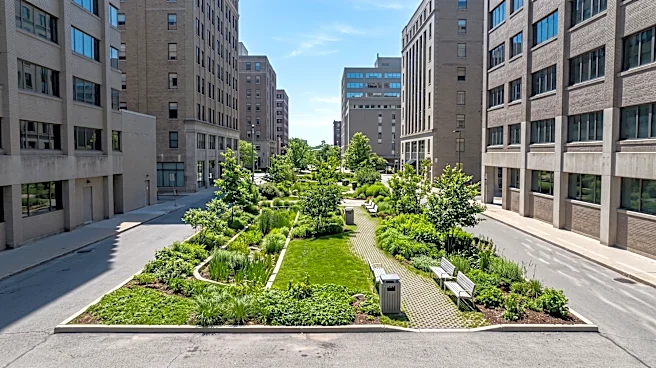
the cooling provided by parks and assess pedestrian accessibility for nearby residents. Xiaowei Li, a leading author of the study, highlighted that green infrastructure, including grass, bioswales, and rain gardens, is vital for urban environments to mitigate heat impacts. The study categorized parks by size and used satellite data to measure land-surface temperature, which can differ significantly from air temperature, especially on paved surfaces. A key finding was that smaller parks sometimes demonstrated higher relative cooling intensity than larger parks. This is attributed to their frequent location in denser urban areas with more concrete and asphalt, creating a greater temperature contrast with the surrounding environment. The study also developed a Walkable Cooling Access Index (WCAI) to evaluate how easily people could reach parks offering meaningful cooling on foot, considering actual road networks rather than just straight-line distances.
Why It's Important?
This study holds significant importance for urban planning and public health in U.S. cities, particularly those grappling with the urban heat island effect. The finding that small parks can provide substantial cooling offers a practical and scalable solution for cities like Detroit, where not all residents have equal access to large green spaces. It suggests that cities don't always need massive new parks to make a difference; targeted improvements to existing small green spaces, increased tree cover, and better walking connections can effectively address cooling needs in vulnerable neighborhoods. This is crucial for public health, as extreme heat poses serious risks, especially to elderly, low-income, and minority populations. By identifying 'cooling deserts' and 'cooling oases,' the research provides actionable data for urban planners to strategically allocate resources and develop green infrastructure where it is most needed. This approach can lead to more equitable distribution of environmental benefits, improving the quality of life and resilience of urban communities against rising temperatures.
What's Next?
The findings of this study are expected to inform future urban planning and green infrastructure development in Detroit and potentially other U.S. cities. Urban planners can utilize the insights to prioritize the creation or enhancement of small green spaces in densely populated, heat-vulnerable neighborhoods. The Walkable Cooling Access Index (WCAI) could become a valuable tool for assessing and improving pedestrian access to cooling benefits, guiding decisions on sidewalk improvements, crosswalks, and public transit routes to parks. Future research may delve deeper into the specific design elements of small parks that maximize cooling efficiency, such as tree canopy density, water features, and permeable surfaces. There is also potential for community engagement initiatives to involve residents in the design and maintenance of local green spaces, fostering a sense of ownership and ensuring that interventions meet community needs. Policymakers may consider integrating these findings into zoning regulations and development incentives to encourage more green infrastructure in private and public projects, aiming for a more resilient and equitable urban environment.
Beyond the Headlines
Beyond the immediate implications for urban cooling, this study touches upon broader themes of environmental justice and the evolving understanding of urban ecosystems. The observation that smaller parks can have a disproportionately strong cooling effect in highly urbanized areas challenges the conventional wisdom that 'bigger is always better' for green spaces. This nuanced understanding can lead to more efficient and impactful greening strategies, especially in historically underserved neighborhoods that often lack large parks but could benefit immensely from smaller, strategically placed green interventions. The concept of 'cooling deserts' highlights systemic inequities in access to environmental amenities, underscoring the need for a justice-oriented approach to urban planning. Furthermore, the study implicitly advocates for a shift in urban design philosophy, moving towards a more integrated approach where green infrastructure is not merely an add-on but a fundamental component of urban development. This could foster a deeper connection between urban residents and nature, promoting ecological literacy and a greater appreciation for the environmental services provided by even modest green spaces.