
What's Happening?
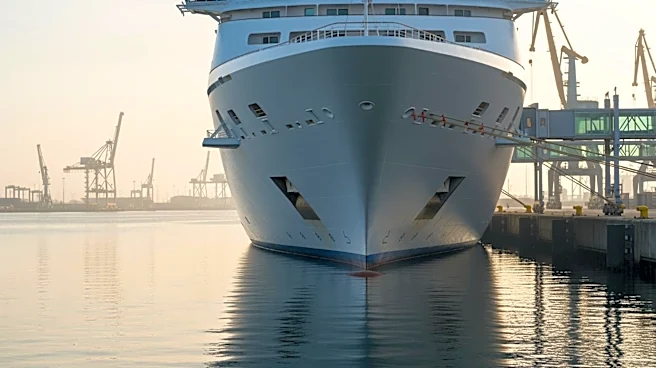
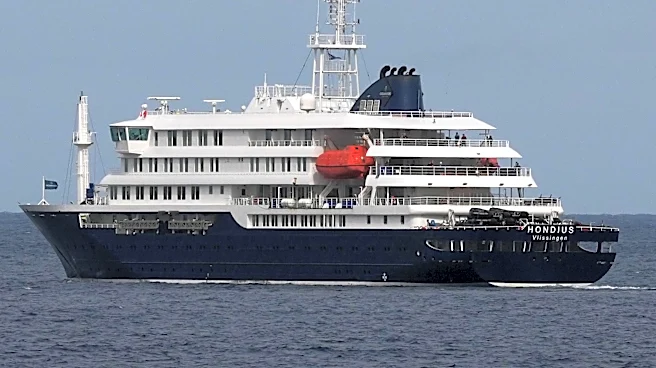
A cruise ship, MV Hondius, affected by a hantavirus outbreak has arrived at Tenerife in the Canary Islands. The ship, carrying 147 passengers, is undergoing a carefully managed repatriation operation.
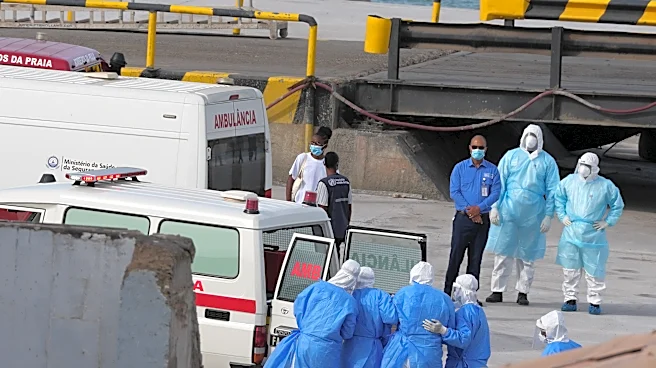
The outbreak, first reported to the World Health Organization on May 2, has resulted in three deaths and several illnesses. Passengers will disembark in small groups based on nationality, with several countries, including the United States, arranging flights to evacuate their citizens. The ship will then proceed to Rotterdam for disinfection. Local tensions have risen due to the ship's arrival, with protests from port workers over communication about potential risks.
Why It's Important?
The repatriation operation highlights the complexities of managing health crises on international vessels. The involvement of multiple countries underscores the global nature of such outbreaks and the need for coordinated international responses. The situation also raises concerns about the adequacy of communication and preparedness in handling infectious disease outbreaks, particularly in regions reliant on tourism. The economic impact on the Canary Islands, a popular tourist destination, could be significant if public confidence in safety measures is undermined.
What's Next?
Following the disembarkation, passengers will undergo health monitoring, with U.S. citizens being transported to a quarantine facility in Nebraska. The ship's crew will continue to Rotterdam, where the vessel will be disinfected. Authorities will likely review protocols for handling similar outbreaks in the future, potentially leading to stricter health regulations for cruise ships. The incident may prompt discussions on improving international cooperation and communication during health emergencies.