




What's Happening?
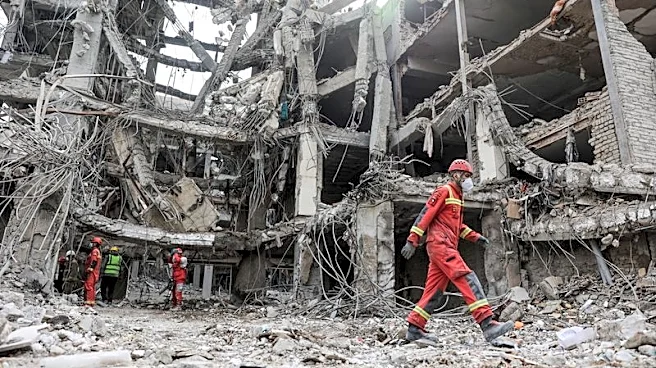
President Donald Trump has proposed a two-week ceasefire with Iran, contingent upon the full reopening of the Strait of Hormuz. This proposal follows discussions with Pakistan's leadership, who acted as intermediaries. Trump announced the ceasefire on his social
media platform, Truth Social, stating that the pause in hostilities would be conditional on Iran's agreement to reopen the Strait completely and safely. The Strait of Hormuz is a critical shipping lane for global oil supplies, and its closure has significantly impacted energy markets. Following the announcement, Brent crude prices fell by 5.8%, and U.S.-traded oil dropped by nearly 8.5%. Trump emphasized the potential for positive economic outcomes and reconstruction efforts in Iran if the ceasefire holds.
Why It's Important?
The reopening of the Strait of Hormuz is crucial for global energy markets, as it is a vital passage for oil shipments. The proposed ceasefire could stabilize oil prices, which have been volatile due to the conflict. A successful ceasefire and reopening could lead to economic benefits for both Iran and the global market, potentially easing tensions in the Middle East. The U.S. and its allies, including the UK, have expressed support for maintaining the ceasefire, highlighting its significance for regional stability. The situation underscores the interconnectedness of geopolitical events and global economic stability.
What's Next?
If Iran agrees to the terms, the ceasefire could pave the way for further diplomatic negotiations and potentially a more lasting peace agreement. The U.S. has indicated its willingness to assist with logistical challenges in the Strait, which could foster improved relations with Iran. However, the situation remains delicate, and any breach of the ceasefire could lead to renewed hostilities. The international community will likely monitor the situation closely, with potential implications for future U.S. foreign policy and energy strategies.