







What's Happening?
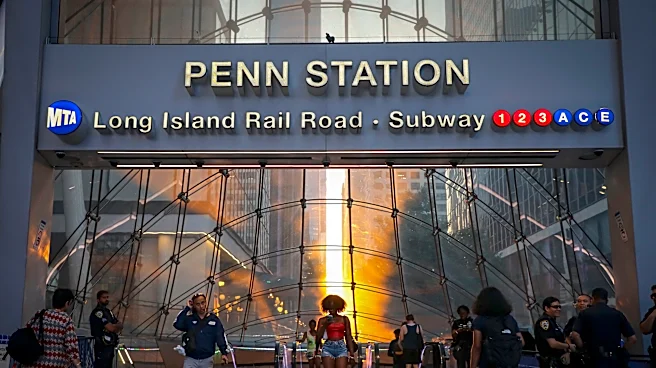
Transportation Secretary Sean Duffy has proposed that Congress direct Amtrak to rename New York's Penn Station as part of an $8 billion renovation project. This proposal has sparked speculation that the station could be renamed in honor of President Trump.
Duffy's suggestion was made in a letter to Senate committee leaders, emphasizing the opportunity to address key initiatives through reauthorization efforts. The Department of Transportation took over the Penn Station renovation from the Metropolitan Transportation Authority last year. The idea of renaming the station after Trump has been met with opposition from some, including retiring Rep. Jerry Nadler, who criticized the proposal as a 'Trump vanity project.' Duffy has also requested an additional $1 billion grant for the station's revamp.
Why It's Important?
The proposal to rename Penn Station has significant implications for public policy and infrastructure development. Renaming a major transit hub like Penn Station could influence public perception and political discourse, especially if it is named after a controversial figure like President Trump. The $8 billion renovation project itself is a substantial investment in infrastructure, potentially creating jobs and improving transit efficiency. However, the funding and execution of such a large-scale project raise questions about financial responsibility and transparency. The opposition from political figures like Rep. Nadler highlights the contentious nature of the proposal, which could impact future legislative negotiations and public support for infrastructure projects.
What's Next?
The proposal to rename Penn Station will likely undergo further scrutiny and debate in Congress. Lawmakers will need to consider the financial implications and public response to the renaming proposal. The additional $1 billion grant request for the renovation will also require approval, which could be influenced by the broader political climate and negotiations over infrastructure funding. Stakeholders, including local government officials and transportation authorities, may weigh in on the proposal, potentially affecting its outcome. The decision could set a precedent for future infrastructure projects and naming rights, influencing how public spaces are branded and funded.