

What's Happening?
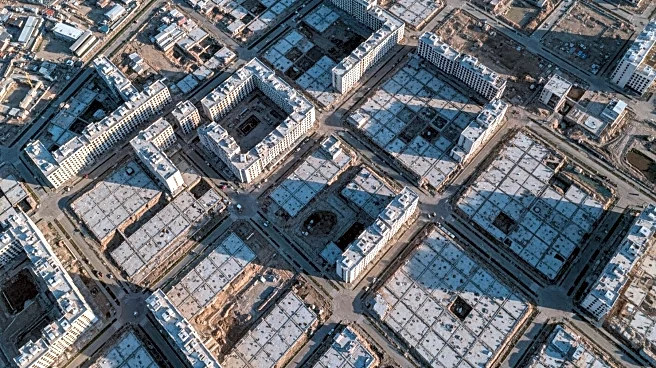
Satellite images have revealed significant earthworks and construction activities in the northeastern region of Rafah in the Gaza Strip. These developments are part of preparations for the second phase of a U.S.-brokered ceasefire agreement between Israel
and Hamas. The construction is intended to accommodate 20,000 residents, as designated by the Israeli Defense Forces (IDF). The work has been ongoing since December, but the Israeli cabinet has not yet ordered the IDF to proceed with the next phase of the ceasefire plan. This phase is contingent upon the return of the last hostage, Ran Gvili, as per IDF officials.
Why It's Important?
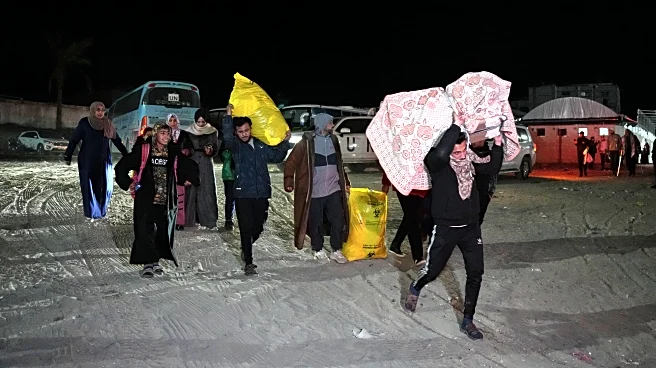
The construction in Rafah is a critical component of the broader ceasefire agreement aimed at stabilizing the region. The housing project signifies a potential shift towards long-term peace and stability in the Gaza Strip, which has been a focal point of conflict between Israel and Hamas. The development could improve living conditions for thousands of Palestinians, potentially reducing tensions. However, the delay in proceeding with the next phase of the ceasefire plan highlights the fragile nature of the peace process and the complexities involved in hostage negotiations.
What's Next?
The next steps involve the Israeli cabinet's decision to initiate the second phase of the ceasefire plan, which hinges on the successful negotiation for the release of the remaining hostage. The international community, including the U.S., will likely continue to play a mediating role in ensuring the ceasefire holds and that the construction projects proceed without further conflict. The outcome of these negotiations will significantly impact the peace process and the future stability of the region.