


What's Happening?
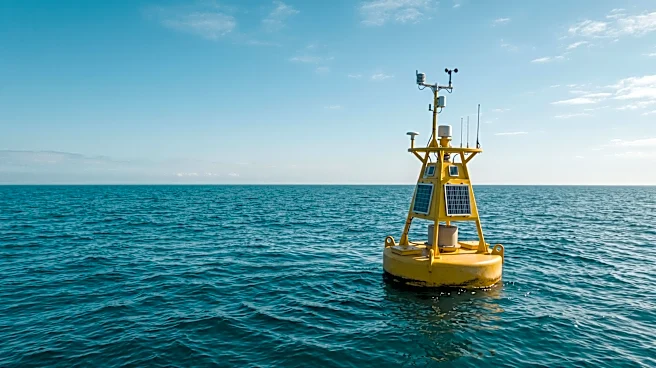
Carbon to Sea has announced the appointment of Paolo Roberto Domondon as its new Vice President of Policy and Finance. In this role, Domondon will lead the organization's efforts to foster a responsible sector for ocean-based carbon dioxide removal, specifically
focusing on ocean alkalinity enhancement (OAE). Domondon brings over two decades of experience in environmental governance and social equity, having previously served as Chief Program and Policy Officer at Global Fishing Watch and Senior Director of Policy and Partnerships at Rare. His expertise includes securing international and national policy wins, building partnerships, and mobilizing financing across diverse regions. Carbon to Sea's mission is to advance rigorous and responsible research into OAE as a climate solution, recognizing its potential to help meet climate targets alongside deep emissions reductions, as highlighted by reports from the Intergovernmental Panel on Climate Change (IPCC) and UNEP.
Why It's Important?
The appointment of Paolo Roberto Domondon signifies a strategic move by Carbon to Sea to accelerate the development and responsible implementation of ocean-based carbon dioxide removal technologies. This initiative is crucial for the U.S. and global efforts to combat climate change, as scientific bodies like the IPCC emphasize the necessity of carbon dioxide removal in addition to emissions reductions to achieve climate targets. The focus on ocean alkalinity enhancement could offer a significant pathway for large-scale carbon sequestration, potentially impacting U.S. environmental policy, technological innovation, and economic investment in climate solutions. The responsible development of this sector, guided by Domondon's expertise in policy and finance, is vital to ensure that these emerging technologies are safe, effective, and scalable, while also addressing potential ethical and ecological considerations. Success in this area could position the U.S. as a leader in novel climate mitigation strategies, attracting investment and fostering new industries.
What's Next?
Paolo Roberto Domondon's immediate focus will be on mobilizing public funding for research and development in ocean alkalinity enhancement, identifying regulatory pathways for both field research and future commercial activity, and designing structures to support a science-driven sector. This will involve engaging with various stakeholders, including governments, scientific institutions, and the private sector, to build consensus and facilitate the necessary frameworks for responsible innovation. Carbon to Sea aims to ensure transparency and shared learning throughout this process. The organization will continue to address core questions regarding the safety, effectiveness, and climate-relevant scale of OAE. The progress made in these areas will likely influence future U.S. climate policy and funding allocations for carbon removal technologies, potentially leading to new regulations and investment opportunities in the coming years.
Beyond the Headlines
The push for ocean-based carbon dioxide removal, spearheaded by organizations like Carbon to Sea, represents a deeper shift in climate strategy, acknowledging that emissions reductions alone may be insufficient to avert the most severe impacts of climate change. This development raises profound ethical and legal questions about humanity's intervention in natural systems on a planetary scale. The concept of ocean alkalinity enhancement, while promising, necessitates careful consideration of its long-term ecological impacts and the equitable distribution of its benefits and risks, particularly for coastal communities and marine ecosystems. The establishment of a responsible sector, as envisioned by Carbon to Sea, will require robust international cooperation and governance frameworks to prevent unintended consequences and ensure that these technologies are deployed justly and effectively. This also highlights the growing importance of interdisciplinary expertise, combining environmental science, policy, finance, and social equity, to navigate the complexities of climate solutions.