





What's Happening?
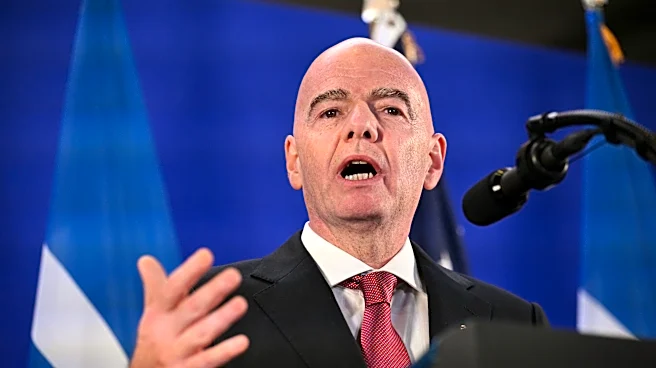
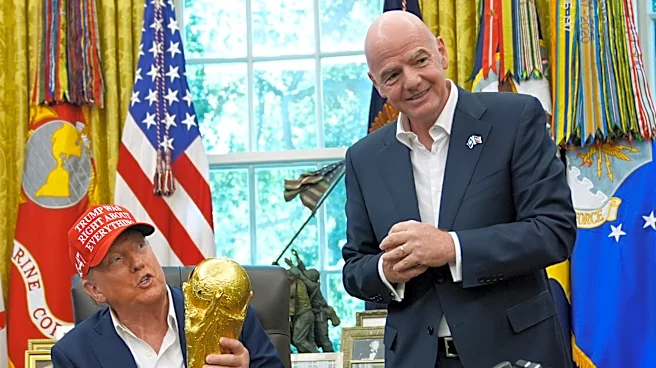
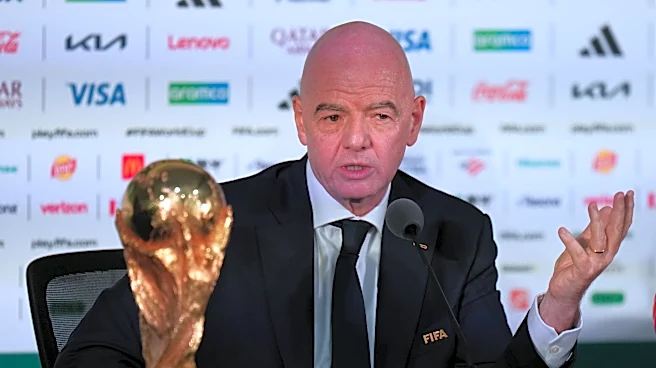
FIFA has decided not to proceed with a controversial plan to create a $20 billion commercial arm by selling stakes in the World Cup and other events to private investors. The proposal, announced by FIFA President Gianni Infantino, faced significant backlash
from soccer confederations across Europe, Asia, and the Americas. These groups argued that the plan would undermine the World Cup's legacy as a non-profit sporting event. Infantino acknowledged that the proposal had caused divisions and was not in line with FIFA's objectives to unite and improve the sport. The plan, which followed the profitable 2026 FIFA World Cup hosted by the U.S., Mexico, and Canada, would have allowed private investors to exploit the commercial side of the sport, with FIFA retaining a controlling share.
Why It's Important?
The decision to scrap the commercialization plan is significant for maintaining the World Cup's status as a non-profit event, preserving its legacy built by players, teams, and fans worldwide. The move reflects the power of global soccer confederations in influencing FIFA's decisions, highlighting the importance of unity and shared interests in the sport. The backlash from major confederations like UEFA and CONCACAF underscores the potential risks of privatizing a globally cherished event. This decision may also impact future discussions on how FIFA can generate revenue while maintaining its non-profit status.
What's Next?
FIFA plans to engage with stakeholders to continue growing the sport, particularly in countries needing support. The organization will focus on strengthening member associations and exploring alternative ways to support global soccer development. The next major event on FIFA's calendar is the 2027 Women's World Cup in Brazil, followed by the 2030 Men's World Cup co-hosted by Spain, Portugal, and Morocco. These events will likely be pivotal in shaping FIFA's future strategies for global soccer development.