
What's Happening?
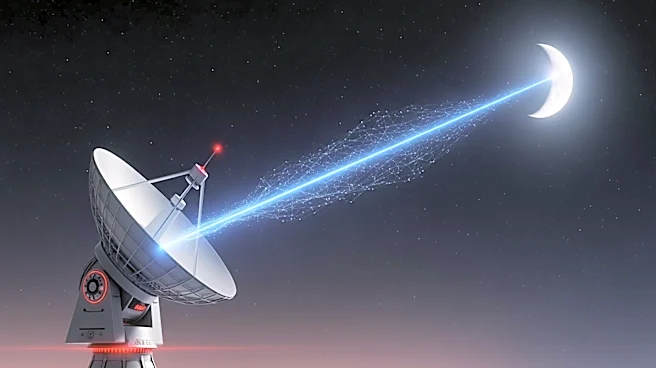
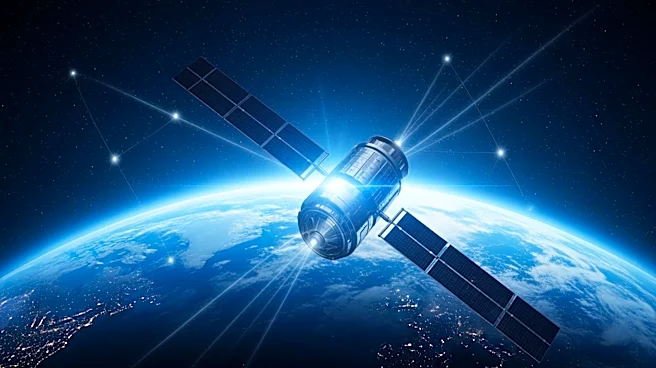
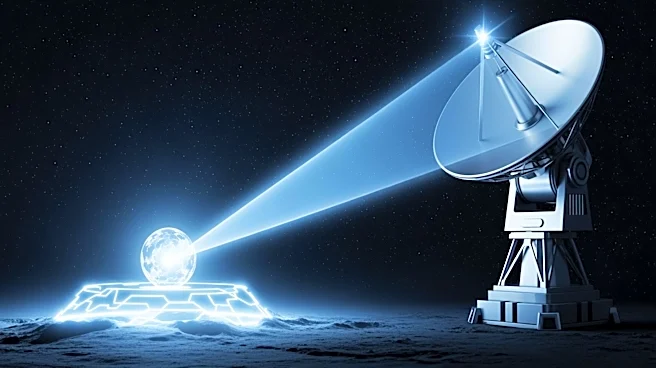
NASA's Artemis II mission has successfully demonstrated the use of laser communication technology to achieve high-speed data transfer between the Moon and Earth. This mission marked the first crewed flight
to the Moon in over five decades, featuring astronauts Reid Wiseman, Victor Glover, Christina Koch, and Canadian astronaut Jeremy Hansen. The laser communication system, which uses infrared light, enabled data transmission at significantly higher speeds than traditional radio frequency systems. The system was tested during the mission, achieving data rates in the hundreds of megabits per second, and successfully transmitted 484 gigabytes of data, including high-definition visuals of the mission.
Why It's Important?
The successful demonstration of laser communication technology during the Artemis II mission represents a significant advancement in space communication capabilities. This technology allows for faster and more efficient data transfer, which is crucial for future space exploration missions. The ability to transmit large volumes of data quickly enhances scientific research and public engagement by providing high-quality visuals and real-time updates. This development is a step forward in supporting complex lunar operations and future missions to Mars and beyond, potentially transforming how data is managed and shared in space exploration.
What's Next?
As NASA continues with the Artemis program, integrating laser communication with existing radio frequency systems will be essential to optimize reliability and coverage. Future missions will likely build on this technology to support more complex operations on the Moon and other celestial bodies. The success of the Artemis II mission sets the stage for more ambitious space exploration endeavors, with laser communication playing a key role in enhancing scientific discovery and enabling new types of crew interactions in space.