







What's Happening?
A newly discovered cave in southwestern China, Bianfu Cave, has yielded a significant collection of Denisovan fossils, offering unprecedented insights into this enigmatic human species. Researchers have identified fragments belonging to at least three
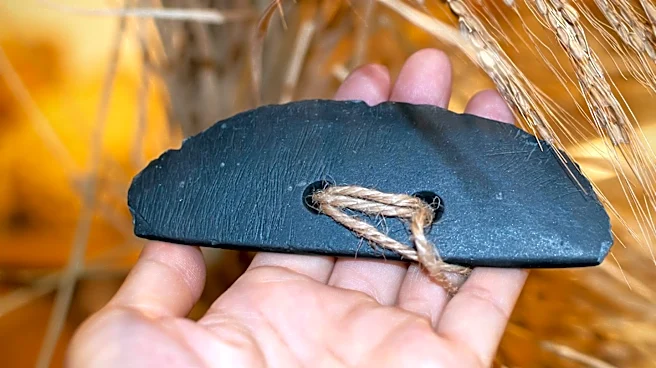
Denisovans who lived between 167,000 and 134,000 years ago. These remains, which include four teeth, two skull pieces, and an arm bone fragment, were found alongside over 1,300 tools and 1,600 identifiable animal remains. Protein analysis and high-quality X-ray scans confirmed the Denisovan identity of the fossils, with the teeth showing distinct similarities to other known Denisovan remains from Laos and Tibet. The presence of a Denisovan-specific collagen variant further solidified the identification. The tools, dating between 190,000 and 70,000 years old, suggest that Denisovans were the sole occupants of the cave during that period and were responsible for their creation. These tools were primarily used for processing animal remains, such as breaking bones, cutting meat, and scraping hides. The animal remains, mainly deer and other ruminants, show signs of butchering, indicating Denisovan hunting and processing activities.
Why It's Important?
This discovery is crucial for understanding the lifestyle and geographical spread of Denisovans, a sister species to modern humans. Prior to this, only a handful of Denisovan fossils had been found, making their daily lives and cultural practices largely a mystery. Bianfu Cave, located in Yunnan Province, borders Myanmar and Laos, making it the southernmost Denisovan site identified to date. This expands the known range of Denisovan habitation and suggests a broader adaptation to diverse environments. The association of tools with Denisovan remains, without evidence of other human species during the cave's occupation, strongly indicates that Denisovans were tool-makers. This challenges previous uncertainties about who created tools found at other Denisovan sites. The evidence of butchered deer bones suggests that Denisovans were adaptable hunters, utilizing different prey based on their environment. This more complete picture of Denisovan life helps fill significant gaps in the human evolutionary timeline and provides a deeper understanding of the cognitive and behavioral capabilities of this ancient human group.
What's Next?
Further research at Bianfu Cave and other potential sites in the region will likely focus on uncovering more Denisovan remains and artifacts to expand the understanding of their culture and technology. Scientists will continue to analyze the tools and animal remains to gain more detailed insights into their hunting strategies, diet, and daily activities. The expanded geographical understanding of Denisovan presence may lead to the re-evaluation of other archaeological findings in Southeast Asia. Additionally, the genetic analysis of any new Denisovan remains could provide further information about their relationship to modern human populations, many of whom carry Denisovan DNA. The ongoing study of these fossils and tools will contribute to a more comprehensive narrative of human migration and evolution across Asia.
Beyond the Headlines
The discovery at Bianfu Cave has profound implications for our understanding of human diversity and adaptation. The fact that Denisovans were not only widespread but also capable of sophisticated tool-making and environmental adaptation highlights the complex tapestry of human evolution. It underscores that the story of human origins is not a linear progression but a branching tree with multiple intelligent and adaptable species coexisting and interacting. This finding could also influence how we interpret the genetic legacy of Denisovans in modern populations, particularly in regions like the Philippines, Tibet, New Guinea, and Australia. Understanding their cultural practices and environmental interactions can shed light on the selective pressures that shaped the genetic traits inherited by these modern groups. The ongoing unraveling of Denisovan secrets reminds us of the vast amount of human history that remains to be discovered and the continuous re-evaluation of our understanding of our own species' past.