






What's Happening?
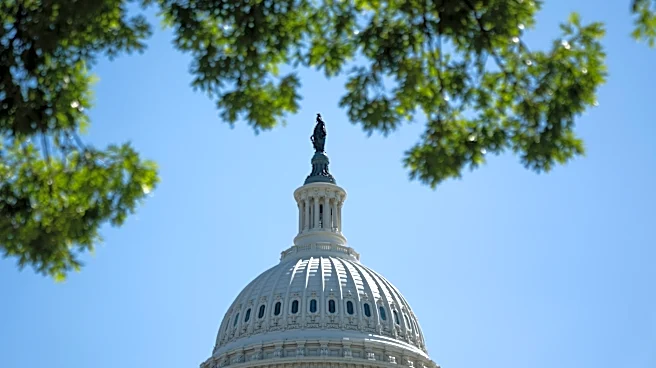
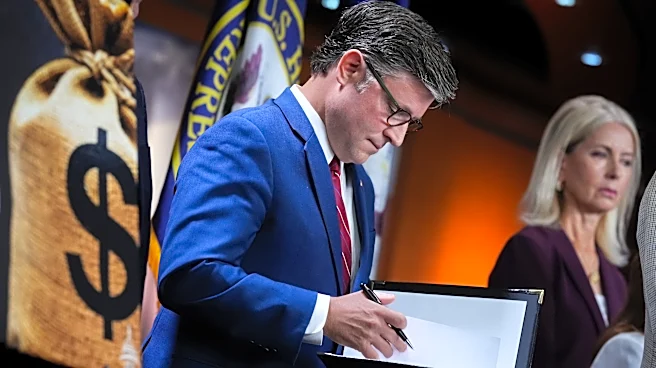
The U.S. House of Representatives has passed the Ukraine Support Act, a significant legislative move aimed at providing aid to Ukraine and imposing new sanctions on Russia. The bill, which passed with a 226-195 vote, includes over $1 billion in assistance
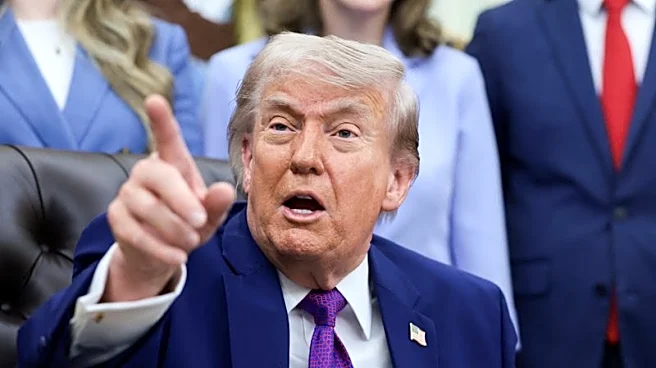
for Ukraine and authorizes up to $8 billion in support through direct loans. This legislative action marks a notable bipartisan effort, with 18 Republicans and one independent joining Democrats to push the bill forward. The act also introduces stringent sanctions on Russian financial institutions, oil, mining sectors, and officials. Despite the House's approval, the bill's future remains uncertain as it moves to the Senate, where Republican leaders have been hesitant to advance similar sanctions legislation without guidance from President Trump.
Why It's Important?
The passage of the Ukraine Support Act underscores a significant shift in U.S. political dynamics, highlighting a growing divide within the Republican Party regarding foreign policy under President Trump. The bill's approval reflects bipartisan concern over Russia's actions and a commitment to supporting Ukraine amidst ongoing conflict. This development could influence U.S. foreign relations, particularly with European allies who are closely monitoring America's stance on Russian aggression. The act's sanctions could further strain U.S.-Russia relations, impacting global economic and political landscapes. Additionally, the legislation's progress may embolden other lawmakers to challenge the administration's foreign policy decisions, potentially leading to broader legislative actions against Russia.
What's Next?
The Ukraine Support Act now faces a critical test in the Senate, where its passage is uncertain. Republican leaders have previously stalled similar measures, awaiting President Trump's direction. If the Senate approves the bill, it could face a presidential veto, given Trump's historical reluctance to impose additional sanctions on Russia. The outcome will likely influence future U.S. foreign policy and legislative actions concerning Russia and Ukraine. Stakeholders, including European allies and international organizations, will be closely watching the Senate's decision, as it could signal a shift in U.S. commitment to global security and democratic values.