






What's Happening?
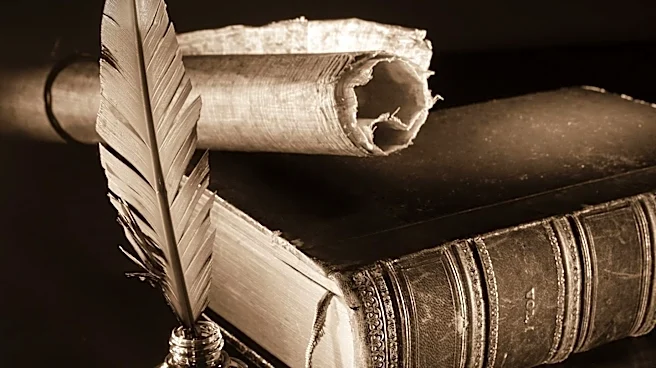
The European Research Council has awarded a €2.5 million grant to Mladen Popovic of the University of Groningen to lead a five-year international project titled 'Tracing Scribes and Scrolls.' This initiative aims to determine the origins of the Dead Sea
Scrolls, which are the earliest known versions of biblical texts. The project involves collaboration with the Israel Antiquities Authority and universities in Pisa, Naples, and Southern Denmark. The research will analyze approximately 250 samples from the scrolls collection, including papyrus and parchment, to understand where the scrolls were produced and copied. The project will also explore the cultural context of the scrolls using advanced laboratory analysis and artificial intelligence to process chemical data and handwriting patterns.
Why It's Important?
The Dead Sea Scrolls are significant for their historical and religious value, providing insights into biblical-era scribal culture and the transmission of knowledge in ancient Judea. Understanding their origins could illuminate the cultural and intellectual exchanges of the time, potentially revealing connections between different centers of scribal activity. The project also represents a significant advancement in the use of artificial intelligence in archaeology, which could set a precedent for future research in the field. The findings may impact our understanding of the historical context of the Bible and other ancient texts, influencing both academic and religious perspectives.
What's Next?
The project will involve extensive analysis of the scrolls over the next five years, with researchers examining papyrus from Egypt alongside those from the Dead Sea caves. This could resolve questions about the influence of Egyptian culture on the scrolls and whether they were produced locally or imported. The use of AI to analyze chemical data and handwriting patterns may uncover new information about the scribes who copied the scrolls and the reasons they were stored in the caves. The results of this research could lead to a deeper understanding of the historical and cultural context of the scrolls, potentially influencing future archaeological and historical studies.
Beyond the Headlines
The project highlights the evolving role of technology in archaeology, particularly the use of AI to analyze ancient artifacts. This approach could revolutionize the field by providing new methods for examining historical documents and artifacts. Additionally, the research may challenge existing theories about the origins and purpose of the Dead Sea Scrolls, prompting a reevaluation of their significance in both historical and religious contexts. The collaboration between international institutions also underscores the global interest in these ancient texts and the importance of interdisciplinary research in uncovering historical truths.