



What's Happening?
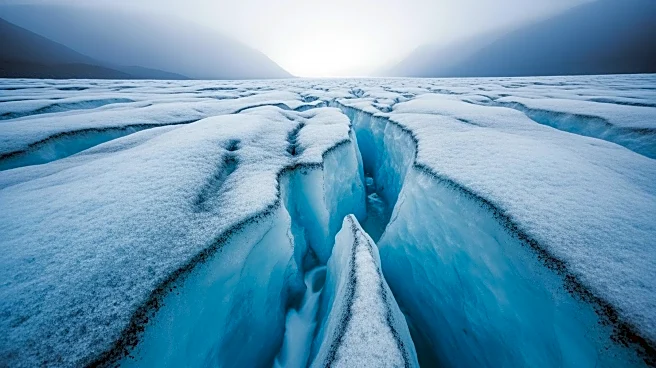
A new international study led by ETH Zurich has projected significant glacier loss worldwide by the end of the century. The research estimates that if global temperatures rise by 4.0°C, only about 18,000 glaciers will remain, compared to 100,000 if warming
is limited to 1.5°C. The study introduces the concept of 'Peak Glacier Extinction,' marking the year when glacier losses peak. Under a 1.5°C scenario, this peak is expected around 2041, with about 2,000 glaciers disappearing annually. In a 4.0°C scenario, the peak shifts to 2055, with annual losses of approximately 4,000 glaciers. The study highlights the severe impact on regions like the Alps, where only a small fraction of glaciers may survive under higher warming scenarios.
Why It's Important?
The findings underscore the urgent need for ambitious climate action to mitigate glacier loss, which has far-reaching implications beyond climate science. Glaciers are crucial for water resources, tourism, and cultural heritage. Their disappearance could lead to water shortages, impact local economies, and alter landscapes. The study provides valuable insights for policymakers and communities to prepare for a future with fewer glaciers. It also emphasizes the importance of limiting global warming to preserve as many glaciers as possible, highlighting the interconnectedness of climate policies and environmental preservation.
What's Next?
The study's projections call for immediate and sustained efforts to curb global warming. Policymakers are urged to implement strategies that align with the Paris Agreement to limit temperature rise. The research also suggests that local communities and industries dependent on glaciers should begin adapting to the anticipated changes. This includes developing alternative water management strategies and diversifying tourism offerings. The study's insights could guide future climate negotiations and influence global environmental policies.
Beyond the Headlines
The concept of 'Peak Glacier Extinction' offers a new perspective on glacier loss, focusing on the number of glaciers rather than ice volume. This approach highlights the vulnerability of smaller glaciers and regions at lower elevations. The study also contributes to the Global Glacier Casualty List, documenting the names and histories of vanished glaciers, emphasizing the cultural and historical significance of these natural features. The research calls for preserving the memory of lost glaciers and protecting those that remain.