





What's Happening?
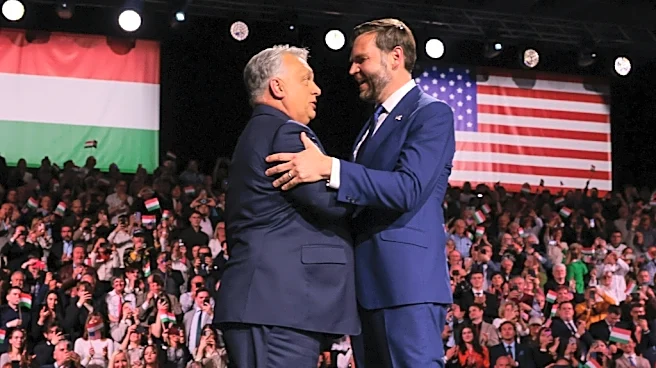
Vice President JD Vance has praised Hungary's approach to higher education under Prime Minister Viktor Orbán, suggesting it as a model for U.S. conservatives. Orbán's government forced the Central European University to relocate to Vienna, citing its
foreign funding and dual accreditation as problematic. Vance, speaking in Hungary, argued that Orbán's crackdown on liberal education could serve as a blueprint for addressing perceived left-wing bias in American universities. This stance aligns with broader conservative efforts to reform higher education in the U.S.
Why It's Important?
Vance's endorsement of Hungary's education policies reflects a growing trend among U.S. conservatives to challenge what they see as liberal dominance in academia. This approach could lead to significant changes in how universities operate, potentially affecting academic freedom and the diversity of thought on campuses. The alignment with Orbán's policies also raises concerns about the influence of authoritarian models on U.S. governance and the potential erosion of democratic norms in education.
What's Next?
The upcoming elections in Hungary and the U.S. could influence the trajectory of these education policies. If Orbán's party remains in power, it may embolden U.S. conservatives to pursue similar reforms. Conversely, a shift in Hungary's political landscape could alter the perceived viability of this model. In the U.S., debates over education reform are likely to intensify, with potential legislative efforts to reshape university governance and funding structures.