


What's Happening?
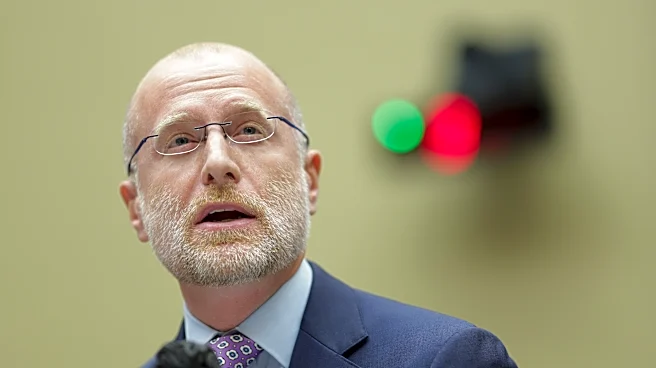
Disney, ABC, and eight of their owned stations have filed a lawsuit against the Federal Communications Commission (FCC) and its chairman, Brendan Carr, in federal court. The lawsuit seeks a restraining order to halt proceedings in which Carr has allegedly
threatened to deny license renewals for these stations. The plaintiffs accuse Carr of engaging in a 'campaign of censorship' that violates the First Amendment. This legal action directly challenges the use of regulatory approvals, specifically broadcast license renewals, as leverage to influence editorial content or exert pressure on media outlets. The case highlights a growing tension between media organizations and regulatory bodies, particularly concerning the boundaries of government oversight and freedom of the press in the United States.
Why It's Important?
This lawsuit is highly significant as it represents a direct legal challenge to what Disney and ABC allege is an attempt by a government regulator to censor media content. The First Amendment implications are substantial, as the case will test the extent to which the FCC can use its authority over license renewals to influence the editorial decisions of broadcasters. A ruling in favor of Disney could reinforce protections for media independence and limit the ability of government officials to exert pressure on news organizations. Conversely, a ruling against Disney could set a precedent that broadens the FCC's power, potentially chilling free speech and leading to increased self-censorship among broadcasters. This case is particularly relevant in the current political climate, where concerns about media bias and government influence on information dissemination are prevalent. The outcome will have lasting effects on the regulatory landscape for U.S. broadcasting and the interpretation of media freedom.
What's Next?
The immediate next step will be the federal court's consideration of Disney's request for a restraining order to halt the FCC's license renewal proceedings. This initial decision will indicate the court's preliminary view on the merits of Disney's First Amendment claims. Following this, the lawsuit will proceed through discovery and potentially a full trial, where both sides will present evidence and arguments regarding the alleged censorship campaign and the FCC's authority. The case could eventually reach higher courts, including the Supreme Court, given its constitutional implications. The outcome will likely influence how the FCC conducts its regulatory oversight of broadcasters in the future, potentially leading to clearer guidelines on the use of license renewals. It could also prompt legislative discussions about the scope of the FCC's powers and the need for additional protections for media independence. Major stakeholders, including other broadcasters and civil liberties groups, will be closely watching the proceedings.
Beyond the Headlines
This lawsuit delves into the deeper philosophical and practical questions surrounding the role of media in a democratic society and the appropriate limits of government regulation. It highlights the tension between the public interest in diverse and uncensored information and the government's legitimate regulatory functions. The case also brings into focus the potential for regulatory bodies to be weaponized for political purposes, raising concerns about the erosion of institutional independence. The outcome could contribute to a broader re-evaluation of media ownership, content regulation, and the balance of power between government and the press in the digital age. Furthermore, the lawsuit's reference to European media-freedom law suggests a global relevance, as countries grapple with similar challenges in protecting journalistic integrity and preventing state pressure on media. This case is not just about a single dispute; it's about defining the future of media freedom in the United States.