

What's Happening?
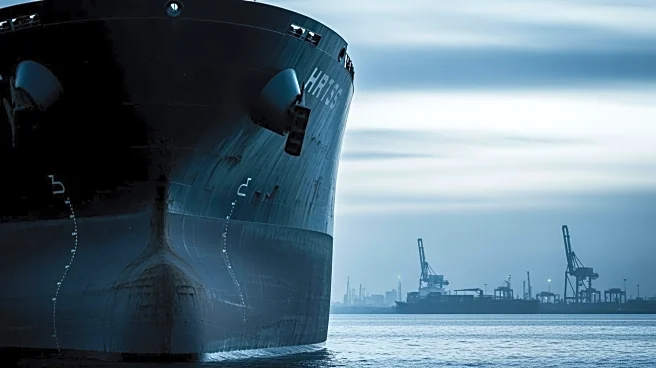
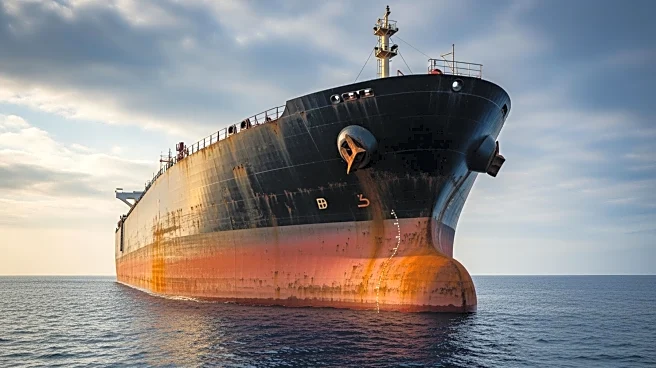
Iran's Revolutionary Guards have issued VHF messages to vessels, stating that passage through the Strait of Hormuz is not allowed, according to an EU naval mission official. The Strait of Hormuz is a critical maritime corridor, accounting for about 20%
of global oil shipments. This move follows Iran's historical pattern of threatening to close the strait in response to perceived aggression. Although Iran has not formally confirmed the directive, the announcement has raised concerns about potential disruptions in global oil supply.
Why It's Important?
The Strait of Hormuz is a vital route for global oil exports, connecting major Gulf oil producers with international markets. Any disruption in this passage could significantly impact global energy markets, leading to increased oil prices and economic instability. The U.S. and its allies have a vested interest in maintaining open navigation through the strait to ensure energy security. This development could escalate tensions in the region, affecting international relations and economic policies.
What's Next?
The international community, particularly countries reliant on Gulf oil, may seek diplomatic solutions to ensure the strait remains open. The U.S. and its allies might increase naval presence in the region to deter any potential blockade. Additionally, oil-importing nations could explore alternative energy sources or routes to mitigate the impact of any prolonged disruption. The situation requires careful monitoring as it could influence global economic and geopolitical dynamics.