






What's Happening?
Michelle Wun Ting Wong, a researcher, writer, and curator based in Hong Kong, is exploring the archival traces of the Ten Men Group's travels across Southeast Asia. Her research, which forms part of a larger inquiry into the intersection of modern art in East
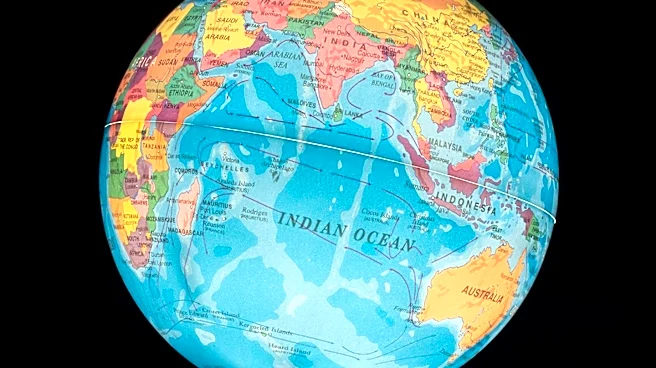
and Southeast Asia during the mid-20th century, focuses on how travel shaped artistic identities, social relationships, and regional connections. Wong's work utilizes photographs and travel albums, particularly those documented by Yeh Chi Wei, to shed light on the social worlds of artists and examine issues of self-presentation, class, and gender. The Ten Men Group, which later formalized into the Southeast Asian Art Association, undertook extensive travels across Malaya, Indonesia, Thailand, Cambodia, Sarawak, Sabah, Brunei, and other regions between the 1960s and 1970s.
Why It's Important?
Wong's research is important because it re-evaluates the role of travel in art history, moving beyond its traditional marginalization to highlight its significance in shaping artistic movements and social dynamics. By focusing on photographic and documentary evidence, she offers a nuanced perspective on how artists presented themselves and interacted within their cultural milieu. This approach challenges conventional art historical narratives that often prioritize artworks over the social context of their creation. Furthermore, her work brings to light the gender dynamics within the Ten Men Group, particularly the role of female artists like Chen Cheng Mei, whose contributions and leadership have been historically underrepresented. This re-examination contributes to a more inclusive understanding of modern art in Southeast Asia.
What's Next?
Wong's ongoing inquiry is expected to continue to uncover and analyze archival materials related to the Ten Men Group and other artists of the period. Future publications and curatorial projects may emerge from this research, further enriching the discourse on modern and contemporary art in East and Southeast Asia. The findings could lead to new exhibitions, academic papers, and public discussions that challenge existing interpretations and highlight previously overlooked aspects of art history. The focus on gender dynamics suggests potential for further studies into the experiences and contributions of women artists in the region.
Beyond the Headlines
The deeper implications of Wong's research extend to how history is constructed and interpreted, particularly in post-colonial contexts. By scrutinizing archival traces, she demonstrates how historical narratives can be re-evaluated to reveal complex social structures, power dynamics, and individual agency. The emphasis on self-presentation through photography and travel albums also speaks to the broader human desire to document and shape one's identity, a theme that resonates across various cultural and historical periods. This work encourages a critical approach to historical sources, urging scholars to look beyond the obvious and consider the subtle ways in which social and cultural values are embedded in artistic practices and documentation.