
What's Happening?
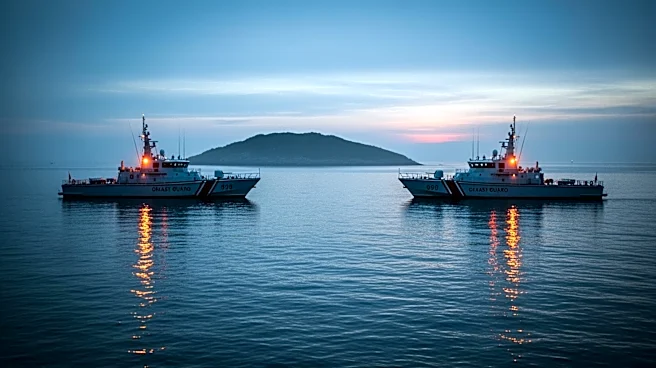
Taiwan's coast guard announced that it had expelled four Chinese government ships from restricted waters off the island's southern coast. This incident occurred after both sides exchanged warnings, escalating
tensions in the region. The Chinese ships, including three coast guard vessels, entered the restricted area 30 nautical miles southwest of Taiwan's southern tip. In response, Taiwan dispatched seven coast guard vessels to confront the Chinese ships, ultimately forcing them to leave the area. The Chinese state media had earlier reported that the ships were conducting a 'special maritime traffic law-enforcement operation' in response to recent announcements by Japan and the Philippines regarding maritime boundary talks, which China views as involving waters off Taiwan. Taiwan's coast guard released a recording of the exchange, where a Chinese officer claimed jurisdiction over the waters, while a Taiwanese officer refuted this, warning of potential global sanctions if conflict arose.
Why It's Important?
This development is significant as it highlights the ongoing tensions between Taiwan and China, with potential implications for regional stability. China's assertion of jurisdiction over waters near Taiwan is part of its broader strategy to assert control over the island, which it considers a breakaway province. The incident underscores the delicate balance of power in the region, where Taiwan, supported by allies like the United States, resists Chinese claims. The expulsion of Chinese ships by Taiwan's coast guard is a demonstration of Taiwan's resolve to maintain its sovereignty and territorial integrity. This situation could impact international relations, particularly with countries like Japan and the Philippines, who are involved in maritime boundary discussions that China opposes. The incident also raises concerns about the potential for military conflict, which could have far-reaching consequences for global trade and security.
What's Next?
The expulsion of Chinese ships from Taiwan's waters may lead to further diplomatic and military responses from China, which has not renounced the use of force to bring Taiwan under its control. Taiwan is likely to continue monitoring Chinese military activities closely and may seek further support from international allies to bolster its defense capabilities. The situation could also prompt discussions within international forums about maritime security and the enforcement of international law in disputed waters. Additionally, the incident may influence future negotiations between China and other countries in the region regarding maritime boundaries and territorial claims.