






What's Happening?
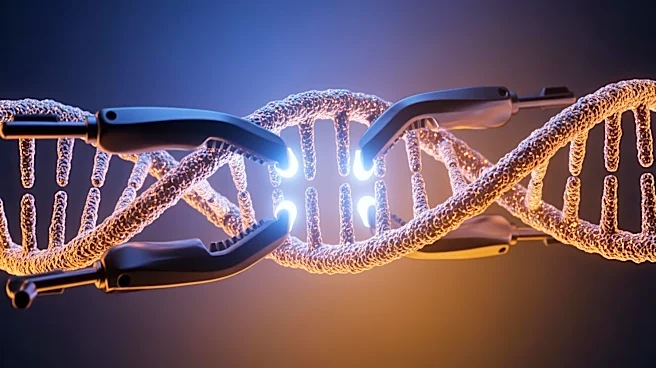
Researchers from Wageningen University & Research and Van Andel Institute have developed a novel gene-editing approach using a CRISPR variant called ThermoCas9. This method exploits the chemical differences between tumor DNA and healthy DNA, specifically
targeting and cleaving tumor DNA while sparing normal tissue. The key to this precision lies in DNA methylation, where methyl groups attach to DNA, regulating gene activity. In cancer cells, these methylation patterns become aberrant, providing a molecular fingerprint for targeting. ThermoCas9, discovered in bacteria, is sensitive to these methylation patterns, allowing it to distinguish between healthy and malignant DNA. The research demonstrated ThermoCas9's ability to selectively cleave tumor DNA in cultured human cells, marking a significant advance in precision medicine.
Why It's Important?
This breakthrough in precision oncology could revolutionize cancer treatment by providing a method to target and destroy cancer cells without harming healthy tissue. The ability to differentiate between tumor and healthy cells based on methylation patterns offers a new avenue for cancer therapies, potentially reducing side effects and improving patient outcomes. The research highlights the potential for ThermoCas9 to be used in treating various cancers and other diseases characterized by aberrant DNA methylation, such as neuroblastoma and autoimmune disorders. This advancement underscores the importance of interdisciplinary research in developing innovative therapeutic strategies.
What's Next?
Future research will focus on enhancing ThermoCas9's ability to induce tumor cell death, moving towards clinical applications. The team aims to amplify DNA damage in tumor cells to trigger apoptosis, advancing the method from laboratory success to clinical trials. The potential for ThermoCas9 to be adapted for other diseases with aberrant methylation patterns will also be explored. As the research community continues to investigate the complexities of epigenetics and CRISPR technology, ThermoCas9-based editing stands poised to become a cornerstone of next-generation cancer therapies.