









What's Happening?
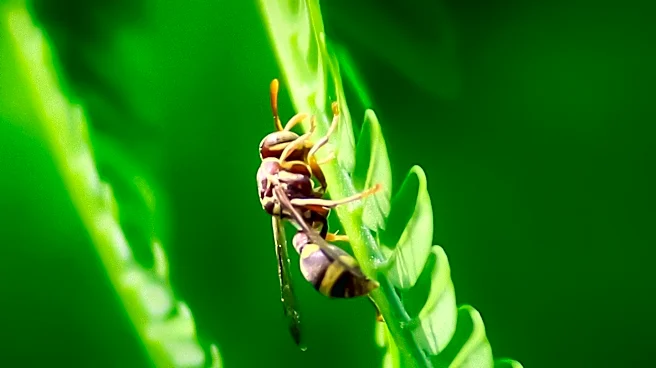
A newly discovered wasp species in China has been named Chlorocytus papahemii in honor of the famous author Ernest Hemingway. This discovery was made by researchers from Xinjiang University, France's CIRAD, and Russia's Academy of Sciences. The wasp plays
a significant role in the ecosystem affecting sugar beet crops. The weevil beetle Lixus subtilis, which damages these crops, is preyed upon by the Eurytoma wasp. The Hemingway wasp, in turn, attacks the Eurytoma wasp. This complex interaction is crucial for understanding and developing biological methods to control plant pests, as highlighted in the journal Zookeys.
Why It's Important?
The naming of the wasp after Hemingway highlights the intersection of culture and science, drawing attention to the ecological challenges faced by agricultural sectors. The sugar beet industry, vital for sugar production, could benefit from understanding these biological interactions. By studying these relationships, scientists aim to develop sustainable pest control methods, potentially reducing reliance on chemical pesticides. This could lead to more environmentally friendly agricultural practices, benefiting both the ecosystem and the economy.
What's Next?
Researchers will likely continue to study the interactions between these species to develop effective pest management strategies. Understanding the full ecological impact of the Hemingway wasp could lead to breakthroughs in biological pest control, offering a model for other agricultural sectors facing similar challenges. The findings may prompt further research into the use of natural predators in crop protection, potentially influencing agricultural policies and practices.
Beyond the Headlines
The discovery of the Hemingway wasp underscores the importance of biodiversity and its role in agricultural sustainability. It raises questions about the balance between human agricultural practices and natural ecosystems. The study of such species interactions could lead to a deeper understanding of ecological networks, promoting conservation efforts and highlighting the need for integrated pest management systems.