







What's Happening?
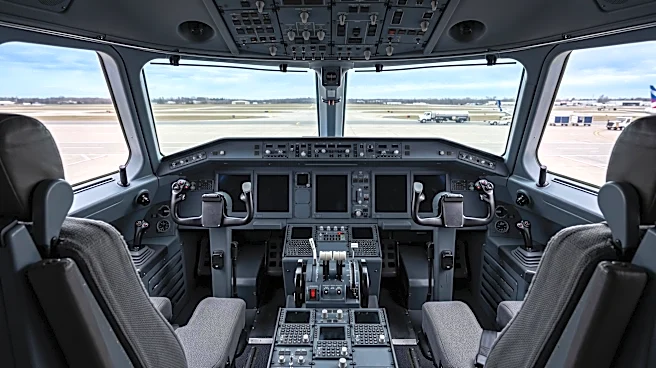
An American Eagle Embraer ERJ-170, operated by Envoy Air on behalf of American Airlines, was forced to return to Chicago O’Hare International Airport (ORD) after its captain reported a loose control yoke shortly after departure. Flight AA-3551, carrying
52 people, was en route from Chicago O’Hare to Minneapolis-Saint Paul International Airport (MSP) when the issue arose. The aircraft had climbed to approximately 9,000 feet before the captain identified the problem. The first officer subsequently took control, and the E170 descended back to O’Hare, landing safely on Runway 10C approximately 25 minutes after its initial departure. The aircraft involved was registered N781EJ, an Embraer E170SU. The precise cause of the loose control yoke has not yet been determined, and maintenance personnel are expected to inspect the flight-control system to identify the reason for the abnormal movement.
Why It's Important?
This incident highlights the critical importance of aircraft maintenance and the rigorous safety protocols in the aviation industry. A malfunctioning control yoke, a primary flight control, could have severe consequences if not addressed promptly and effectively. The quick actions of the flight crew in identifying the issue and safely returning the aircraft underscore the extensive training and professionalism required of pilots. For passengers, such events can cause anxiety and disrupt travel plans, but the safe resolution reinforces confidence in the safety systems in place. For airlines like Envoy Air and American Airlines, incidents like this necessitate thorough investigations to prevent recurrence, which can impact operational efficiency and public perception. The incident also emphasizes the continuous need for robust inspection and maintenance regimes for all aircraft components.
What's Next?
Following the safe landing, maintenance personnel will conduct a comprehensive inspection of the Embraer E170's flight-control system to pinpoint the exact cause of the loose control yoke. This investigation will be crucial in determining whether the issue was a mechanical failure, a maintenance oversight, or another factor. Depending on the findings, the airline and regulatory bodies may implement corrective actions, which could include revised maintenance procedures, component replacements, or additional crew training. The Federal Aviation Administration (FAA) will likely review the incident to ensure compliance with safety regulations and to assess if any broader safety directives are warranted for this aircraft type or similar systems. The aircraft will remain out of service until it is deemed airworthy and all necessary repairs and inspections are completed.
Beyond the Headlines
Beyond the immediate safety implications, this event underscores the complex interplay of human expertise and advanced engineering in modern aviation. While rare, such mechanical anomalies serve as reminders of the constant vigilance required to maintain air safety. The incident could also prompt a deeper look into the wear and tear of critical flight components, especially in aircraft that undergo frequent cycles of takeoffs and landings. From a broader industry perspective, the findings from this investigation could contribute to improvements in aircraft design, manufacturing standards, and maintenance practices across the aviation sector. It also reinforces the public's reliance on the unseen layers of safety checks and balances that ensure air travel remains one of the safest modes of transportation.