





What's Happening?
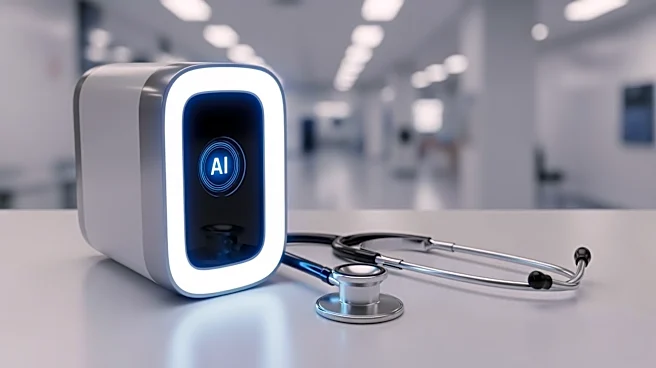
A recent study conducted by researchers from Harvard Medical School and Beth Israel Deaconess Medical Center has demonstrated that an AI model, known as OpenAI's o1, outperformed human doctors in diagnosing complex cases in emergency room settings. The
study, published in the journal Science, involved six separate experiments where the AI model was pitted against hundreds of doctors with varying levels of experience. The AI model consistently outperformed the doctors, achieving a correct or very close diagnosis in 78.3% of cases, with accuracy rising to 97.9% when considering very close diagnoses. The study highlights the potential of AI in improving diagnostic accuracy, particularly in emergency situations where information is limited and time is critical.
Why It's Important?
The findings of this study are significant as they suggest that AI could play a crucial role in enhancing medical diagnostics, particularly in high-pressure environments like emergency rooms. The ability of AI to process and analyze complex medical data quickly and accurately could lead to improved patient outcomes and more efficient use of medical resources. However, the study also emphasizes the importance of integrating AI into clinical workflows in a way that complements human expertise rather than replacing it. This development could lead to a shift in how medical professionals approach diagnostics, potentially reducing diagnostic errors and improving the overall quality of care.
What's Next?
The researchers involved in the study are advocating for further controlled studies to assess the impact of AI on actual patient outcomes. They emphasize the need for AI to be tested in clinical trials before it becomes a routine part of medical practice. Additionally, there is a call for AI to be used as a second opinion tool in emergency room settings, where it could help identify diagnostic errors or missed opportunities for diagnosis. As AI technology continues to evolve, its integration into healthcare systems will require careful consideration of ethical and practical implications, ensuring that it enhances rather than diminishes the role of human healthcare providers.
Beyond the Headlines
The study raises important questions about the future role of AI in medicine and the potential ethical implications of its widespread use. While AI has demonstrated impressive diagnostic capabilities, there is a risk that overreliance on technology could lead to a reduction in critical thinking and decision-making skills among medical professionals. Additionally, the study highlights the need for AI systems to be inclusive and accurate across diverse patient populations, addressing potential biases that could affect diagnostic accuracy. As AI becomes more integrated into healthcare, it will be essential to balance technological advancements with the human touch that is crucial in patient care.