



What's Happening?
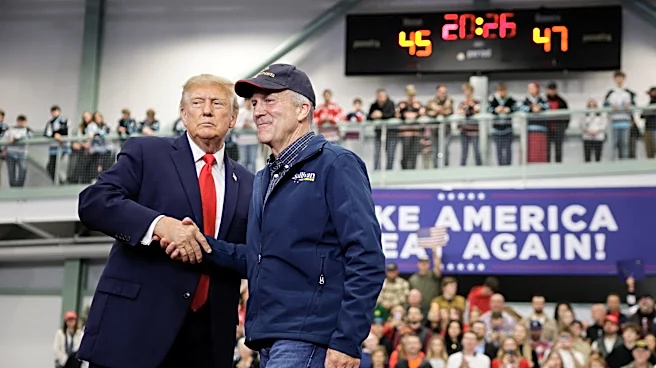
Representative David Taylor (Republican-Ohio) recently reported the sale of shares in Marathon Petroleum Corporation (NYSE:MPC). A filing disclosed on October 29th indicated that Representative Taylor sold between $1,001 and $15,000 worth of Marathon Petroleum stock
on October 15th. This transaction occurred within the Representative's "DAVID TAYLOR TRUST > SARDINIA READY MIX 401(K) - DAVE" account. Marathon Petroleum Corporation is a major American downstream energy company, headquartered in Findlay, Ohio, involved in refining, marketing, and transporting petroleum products. The company operates the nation's largest refining system and a broad U.S. marketing network. Its operations include converting crude oil into various refined products such as gasoline, diesel, jet fuel, and asphalt, which are utilized by transportation, industrial, and commercial customers across the United States.
Why It's Important?
The reported stock sale by Representative David Taylor, while a relatively small transaction in the context of Marathon Petroleum's market capitalization, highlights the ongoing scrutiny of financial dealings by U.S. lawmakers. Such disclosures are mandated to ensure transparency and prevent potential conflicts of interest, particularly when legislators may have access to information that could influence market performance or policy decisions affecting specific industries. For the energy sector, any financial activity by a lawmaker involving a major player like Marathon Petroleum can draw attention, as the industry is heavily regulated and often subject to legislative actions. While there is no indication of impropriety in this specific instance, the importance lies in the principle of public accountability and the continuous monitoring of financial transactions by elected officials to maintain public trust in the integrity of the political and economic systems. This event underscores the mechanisms in place to track and report such activities, providing a layer of oversight for the public and financial markets.
What's Next?
The reported sale of Marathon Petroleum stock by Representative David Taylor has already been disclosed as per regulatory requirements. No immediate further actions are typically expected from such a routine disclosure unless there are indications of non-compliance or a conflict of interest, which have not been suggested in this case. The transaction will remain part of the public record, contributing to the transparency of lawmakers' financial activities. For Marathon Petroleum, the stock sale by an individual lawmaker is unlikely to have a significant impact on its overall market performance or operational strategies, given the size of the transaction relative to the company's market capitalization of $129.89 billion. The company will continue its operations as a leading integrated downstream and midstream energy provider in the U.S., focusing on its refining, marketing, and transportation segments. The broader market will continue to monitor Marathon Petroleum's financial performance, including its upcoming earnings reports and dividend announcements.
Beyond the Headlines
The disclosure of stock transactions by U.S. lawmakers, such as Representative David Taylor's sale of Marathon Petroleum shares, points to a larger discussion about financial ethics and transparency in government. While legal, these transactions often spark public debate regarding potential insider trading or conflicts of interest, even if none are present. The very existence of such reporting requirements underscores the public's expectation that elected officials should not personally profit from their positions or access to privileged information. This ongoing tension between personal financial freedom and public trust often leads to calls for stricter regulations, such as bans on individual stock trading for members of Congress. The incident, therefore, serves as a reminder of the delicate balance between a lawmaker's private financial life and their public duties, and the continuous effort to uphold ethical standards in U.S. politics. It also highlights the role of transparency in maintaining the integrity of both the political system and the financial markets.