
What's Happening?
Scientists at the University of Washington have created a sophisticated computer simulation of Earth's entire history, spanning approximately five billion years. This simulation, designed to identify potentially habitable planets and search for extraterrestrial
life, successfully reproduced 19 significant planetary properties. A key aspect of this research involved creating a virtual Earth where biological activity was intentionally excluded. This allowed researchers to understand how geological and chemical processes could maintain conditions suitable for liquid water in the absence of life. The simulation helps distinguish between a 'habitable planet' (capable of supporting life) and an 'inhabited planet' (where life actually exists), providing a baseline for interpreting potential biosignatures on other worlds. This approach is crucial because certain gases, like oxygen, can be produced by both biological and non-biological processes, making it challenging to definitively identify life based solely on atmospheric composition.
Why It's Important?
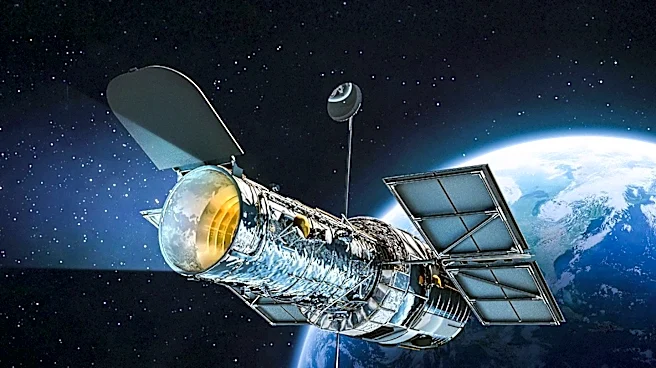
This research is important for the U.S. scientific community and its ongoing efforts in astrobiology and exoplanet research. By providing a model of Earth without life, scientists can better interpret data from exoplanets, helping to refine the search for life beyond Earth. The ability to differentiate between biological and non-biological origins of potential biosignatures, such as atmospheric gases, is critical for avoiding false positives and focusing resources effectively. This simulation could influence the design and scientific objectives of future space telescopes, like the proposed NASA telescope for studying Earth-like planets, by guiding what specific indicators to look for. It also offers a new theoretical framework for understanding planetary habitability, potentially expanding the types of environments considered viable for life and impacting the strategies for future planetary exploration missions.
What's Next?
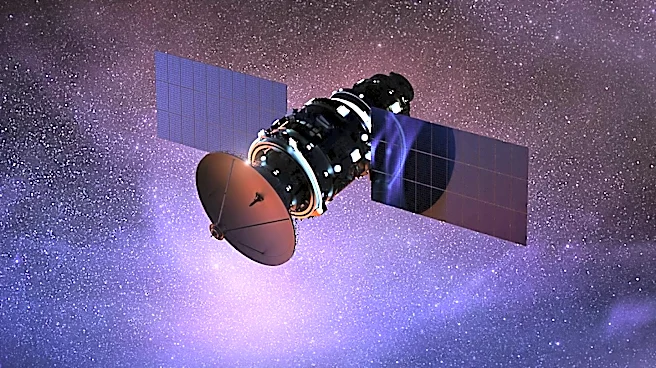
The new simulation is expected to help scientists identify potentially habitable exoplanets and interpret their atmospheric chemical compositions more accurately. It will also aid in distinguishing between biological and non-biological signals, which is a significant challenge in astrobiology. This refined understanding could lead to improvements in the design and scientific objectives of future space telescopes and planetary probes. The insights gained from this research will likely inform upcoming missions to celestial bodies like Mars, Europa, and Venus, guiding the types of instruments and analytical approaches used to search for signs of life. The ongoing debate about the nature of life and how to detect it will continue to evolve with such theoretical advancements, potentially leading to new definitions and search methodologies.
Beyond the Headlines
The development of this Earth simulation touches upon deeper philosophical and scientific questions regarding the definition of life itself. By excluding biological activity, the simulation forces a re-evaluation of what constitutes a 'biosignature' and challenges the anthropocentric bias in the search for extraterrestrial life. It highlights the complexity of distinguishing between natural planetary processes and those influenced by living organisms. This research could lead to a broader understanding of life's potential forms and manifestations, moving beyond Earth-like assumptions. It also underscores the interdisciplinary nature of astrobiology, combining physics, geology, chemistry, and biology to tackle one of humanity's most profound questions: are we alone in the universe? The theoretical framework provided by this simulation could inspire new experimental designs and observational strategies, pushing the boundaries of scientific inquiry into the origins and prevalence of life.