


What's Happening?
French anti-terrorism prosecutors have launched an investigation following an attempted bomb attack outside the Bank of America's Paris headquarters. The incident occurred in the early hours of March 28, 2026, when a suspect was apprehended by police
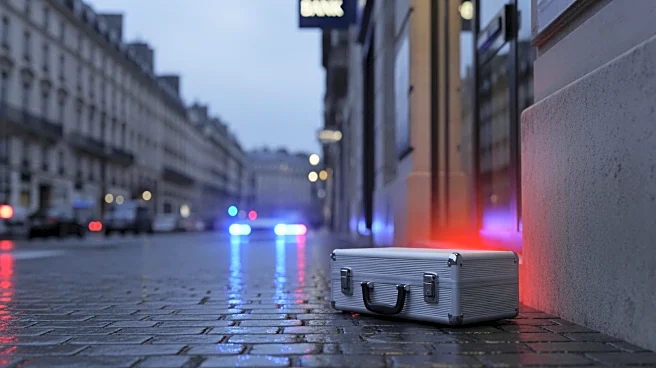
as he attempted to ignite a homemade explosive device. The arrest took place in the 8th arrondissement, a prestigious district near the Champs-Elysees. The suspect reportedly claimed he was contacted via Snapchat and paid 600 euros to carry out the attack. A second individual, who was present at the scene, managed to escape and remains at large. The explosive device, consisting of a 5-litre container with an unidentified liquid and 650 grams of powder, was secured by forensic experts. The investigation is being handled by the Paris police judicial unit and France's domestic intelligence agency, DGSI, focusing on potential terrorist connections and accomplices.
Why It's Important?
This incident underscores the persistent threat of terrorism in major urban centers, particularly targeting international institutions. The swift response by French authorities highlights the ongoing vigilance required to prevent such attacks. The involvement of a U.S. bank in Paris as a target may have broader implications for international security protocols and the protection of foreign assets. The use of social media platforms like Snapchat for recruitment and coordination of such acts raises concerns about digital security and the need for enhanced monitoring. The incident could lead to increased security measures around international financial institutions and heightened cooperation between countries to combat terrorism.
What's Next?
The investigation will likely focus on identifying the second suspect and any broader network involved in the plot. French authorities may increase security measures in high-risk areas and around international institutions. The incident could prompt discussions on improving digital surveillance to prevent the use of social media for terrorist activities. International cooperation may be strengthened to address the cross-border nature of such threats. The outcome of the investigation could influence future counter-terrorism strategies and policies in France and beyond.