


What's Happening?
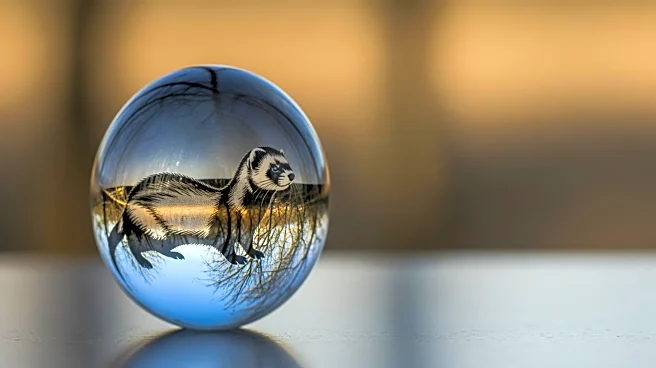
Scientists are employing cloning techniques to help recover the endangered black-footed ferret population in the Western United States. Once thought extinct, these carnivores have faced significant challenges due to habitat destruction and diseases like
the sylvatic plague. The Phoenix Zoo's conservation director, Tara Harris, highlights the impact of climate change and a megadrought on prairie dog populations, which are crucial to the ferrets' survival. A breakthrough came when genetic specimens from the 1980s were used to clone ferrets, leading to the birth of new litters at the Smithsonian’s National Zoo. This effort, led by organizations like Revive & Restore, aims to increase genetic diversity and bolster the ferret population.
Why It's Important?
The cloning of black-footed ferrets represents a significant advancement in conservation efforts, offering a potential lifeline for a species on the brink of extinction. This initiative not only aims to restore the ferret population but also addresses broader ecological concerns, as ferrets play a vital role in their ecosystem. The success of this project could set a precedent for using cloning to preserve other endangered species, highlighting the importance of genetic diversity in conservation. However, it also raises ethical questions about the reliance on technology to rectify human-induced environmental damage.
What's Next?
The cloned ferrets are currently part of a research program, with plans to eventually release their offspring into the wild. Scientists are also exploring genetic modifications to enhance the ferrets' resistance to diseases like the sylvatic plague. These efforts are part of a broader strategy to ensure the long-term survival of the species. The success of these initiatives could influence future conservation policies and practices, potentially leading to more widespread use of cloning and genetic engineering in wildlife preservation.
Beyond the Headlines
The use of cloning in conservation raises ethical considerations about the potential for 'moral hazard,' where reliance on technology might reduce efforts to address the root causes of species endangerment. Additionally, the long-term viability of cloned populations in the wild remains uncertain, as their success depends on the restoration of suitable habitats. This development also underscores the need for proactive measures to preserve biodiversity before species reach critical endangerment levels.