


What's Happening?
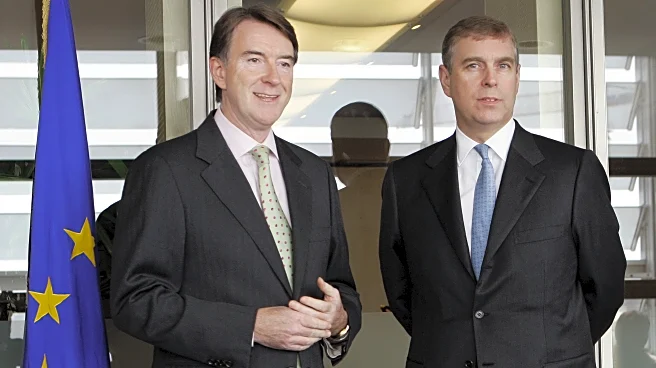
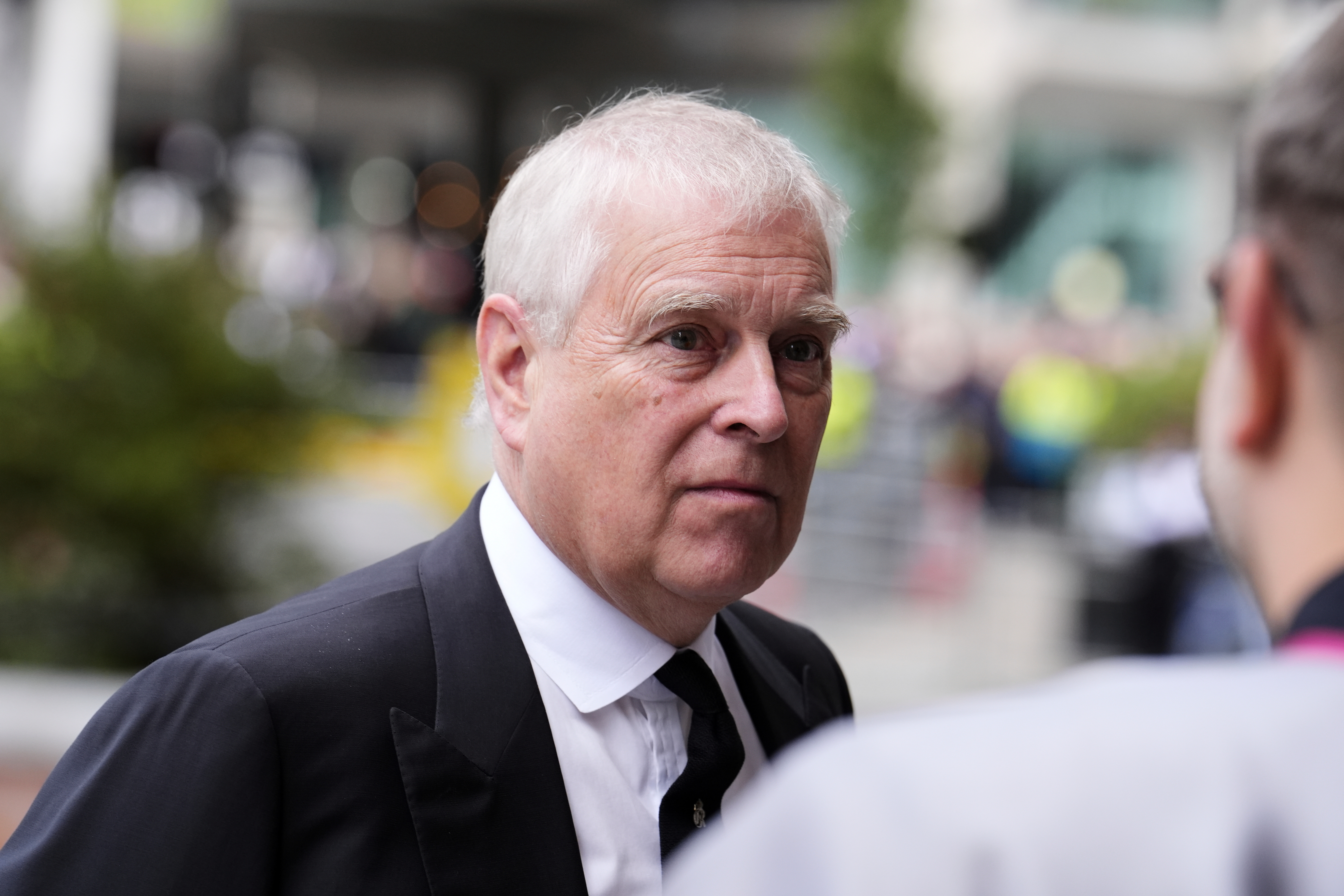
Former Prince Andrew, also known as Andrew Mountbatten-Windsor, has been arrested by U.K. authorities on suspicion of misconduct in public office. This arrest is part of an ongoing investigation into allegations that he shared sensitive trade secrets
with Jeffrey Epstein during his tenure as the U.K. special representative for international trade and investment. The arrest follows the release of the Epstein files by the U.S. Department of Justice, which suggested potential misconduct. The former prince was taken into custody and later released, while police continue to search his former residence, Royal Lodge. The investigation is being closely watched, with significant media coverage outside the Royal Lodge.
Why It's Important?
The arrest of former Prince Andrew is significant as it highlights ongoing concerns about accountability and transparency within the British monarchy. The allegations against him, if proven, could have severe implications for the royal family, potentially affecting public trust and the monarchy's reputation. The case also underscores the broader issue of powerful individuals being held accountable for their actions, particularly in connection with the Epstein scandal. This development may prompt further scrutiny of other high-profile figures linked to Epstein, potentially leading to more legal actions and reforms aimed at preventing abuse of power.
What's Next?
As the investigation continues, authorities are expected to gather more evidence to determine whether formal charges will be filed against the former prince. The outcome of this case could influence public opinion and potentially lead to calls for reforms within the monarchy. Additionally, the royal family may face increased pressure to address these issues publicly and implement measures to restore trust. The situation is likely to remain in the public eye, with further developments anticipated as the investigation progresses.
Beyond the Headlines
The arrest of former Prince Andrew could have long-term implications for the British monarchy, potentially accelerating calls for reform and greater transparency. This situation may serve as a catalyst for broader discussions about the role and accountability of the monarchy in modern society. Additionally, it highlights the ongoing impact of the Epstein scandal, which continues to reverberate across various sectors, prompting renewed focus on issues of power, privilege, and justice.