




What's Happening?
Veronica Perry, the Director of Baltimore’s Department of Transportation (DOT), is stepping down from her position, with her last day scheduled for October 1. Mayor Brandon Scott announced her departure but did not provide a reason for her resignation.
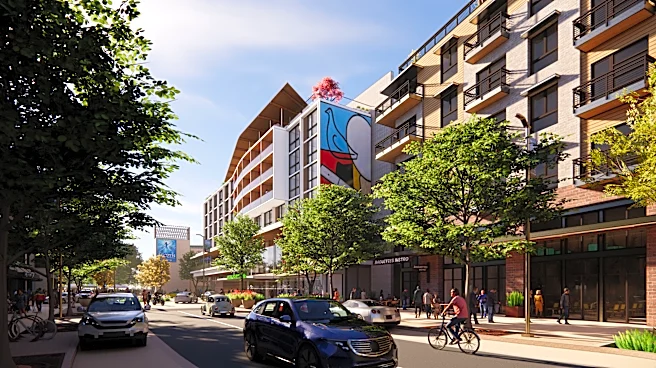
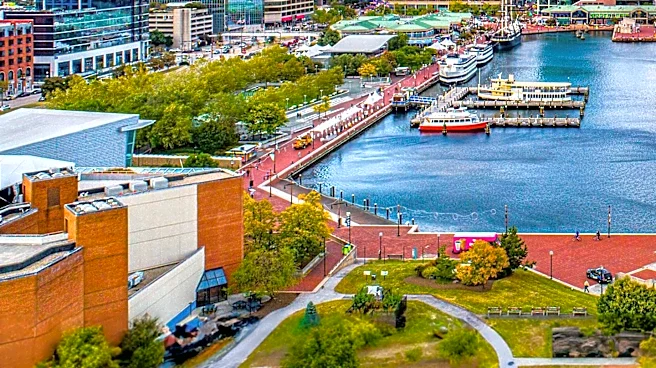
Berke Attila, the director of Baltimore’s Department of General Services (DGS), will serve as interim DOT director, while Terrel Chessen will take over as interim DGS deputy director. Perry's departure comes as the city prepares for a significant reconfiguration of downtown traffic patterns, particularly around the Inner Harbor, to accommodate a $900 million private redevelopment project at Harborplace led by MCB Real Estate. This project involves closing the five-lane Light Street-to-Calvert Street 'sweep' and reducing lanes on Light Street to create space for two residential towers, offices, shops, restaurants, and open areas.
Why It's Important?
The resignation of Baltimore's DOT Director at a critical juncture raises concerns about the continuity and oversight of major urban development projects. The planned traffic reconfiguration at the Inner Harbor is a substantial undertaking, comparable to New York City's transformation of Times Square, and will significantly alter daily commutes and access for residents and visitors. The leadership transition could introduce delays or changes in the implementation of these complex plans, potentially impacting the timeline and budget of the Harborplace redevelopment. This situation also highlights the challenges faced by city administrations in managing large-scale infrastructure changes, especially when they involve public-private partnerships and significant alterations to established urban layouts. The success or failure of this project will have long-term implications for Baltimore's economic revitalization and urban planning strategies, affecting businesses, residents, and the city's overall appeal.
What's Next?
The immediate next step for Baltimore is to find a permanent replacement for Veronica Perry as DOT Director. In the interim, Berke Attila will lead the department, tasked with overseeing the initial phases of the downtown traffic reconfiguration. Preparation work for the Light Street realignment could begin as early as November, though city officials have indicated this date is not firm. MCB Real Estate aims to start site work on the first phase of the Harborplace development, including the demolition of pavilions, in the fourth quarter of 2026. Public hearings regarding the lane closures on Light Street may not be held, as city officials suggest the Planning Commission and City Council have already approved the broader Downtown Rise master plan, which includes the realignment. Stakeholders, including residents and businesses, will closely monitor the interim leadership's decisions and the progress of the traffic changes and redevelopment.
Beyond the Headlines
The departure of a key transportation official amidst a major urban overhaul underscores the intricate political and logistical challenges inherent in large-scale city planning. The Harborplace redevelopment and associated traffic changes represent more than just infrastructure projects; they are symbolic of Baltimore's ongoing efforts to redefine its urban core and economic identity. The decision to reduce traffic lanes and prioritize pedestrian-friendly spaces reflects a broader national trend towards urban revitalization that emphasizes walkability, mixed-use developments, and public spaces over car-centric infrastructure. However, such transformations often face resistance due to concerns about traffic congestion, accessibility, and the impact on local businesses. The lack of explicit public hearings on lane closures, despite prior approvals of the master plan, could also raise questions about transparency and community engagement in major urban development decisions, potentially leading to public dissent or legal challenges.