





What's Happening?
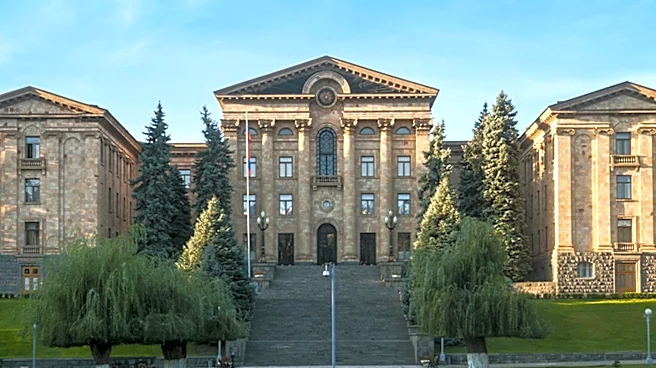
Armenia’s National Assembly has ratified a financing agreement with the International Bank for Reconstruction and Development (IBRD) to provide housing assistance for families displaced from Nagorno-Karabakh. The agreement, titled the 'Armenia Housing
Security and Mortgage Market Development Program,' was approved with 66 votes in favor and 21 abstentions. The total financing for the program amounts to $284.4 million, which includes $264.4 million in loan financing. Deputy Minister of Labor and Social Affairs Lusine Kocharyan stated that $240 million will be provided through an IBRD loan, and an additional $24.4 million will come from a grant under a concessional financing facility. The funding will be disbursed in stages to support the program's implementation, with over 6 billion Armenian drams already allocated from the state budget for this initiative. The primary goal of this agreement is to strengthen housing assistance for displaced families and simultaneously support the development of Armenia’s housing and mortgage market.
Why It's Important?
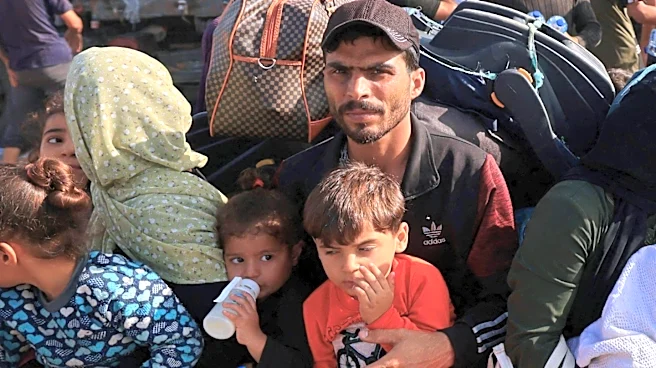
This agreement is crucial for addressing the humanitarian crisis resulting from the displacement of families from Nagorno-Karabakh. By providing substantial financial support for housing, Armenia aims to offer stability and a path to recovery for thousands of individuals and families who have lost their homes. The development of Armenia's housing and mortgage market, as a secondary objective, could stimulate economic activity, create jobs, and integrate the displaced population more effectively into the broader Armenian economy. This initiative also highlights the ongoing international support, particularly from institutions like the IBRD, in managing the aftermath of regional conflicts. The successful implementation of this program could serve as a model for other regions facing similar displacement challenges, demonstrating a structured approach to humanitarian aid and long-term integration.
What's Next?
The funding, totaling $284.4 million, will be disbursed in stages, indicating a phased implementation of the housing assistance program. The Armenian government will likely focus on establishing the necessary infrastructure and administrative processes to efficiently distribute the aid and manage the housing and mortgage market development initiatives. Monitoring and evaluation mechanisms will be essential to ensure the funds are used effectively and reach the intended beneficiaries. Further legislative actions or policy adjustments might be required as the program progresses to address any unforeseen challenges or adapt to changing needs. The success of this program could also influence future international aid and development strategies for Armenia, potentially opening doors for additional collaborations with international financial institutions.
Beyond the Headlines
Beyond the immediate provision of housing, this agreement carries deeper implications for social cohesion and national identity in Armenia. The integration of displaced families from Nagorno-Karabakh into Armenian society is a complex process that extends beyond physical housing to include cultural, social, and economic assimilation. The development of the housing and mortgage market could also lead to broader economic reforms and increased foreign investment, positioning Armenia as a more stable and attractive environment for international cooperation. However, challenges such as ensuring equitable distribution of aid, preventing corruption, and addressing the psychological trauma of displacement will remain critical. The long-term success of this program will depend on sustained political will, effective governance, and continued international support to foster a resilient and inclusive society.