






What's Happening?
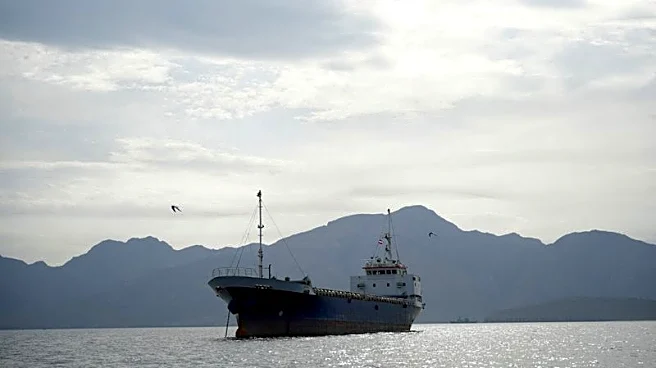
Iraq has resumed its southern oil exports after a month-long suspension caused by disruptions in the Strait of Hormuz. The Malta-flagged tanker Agios Fanourios 1 has begun loading approximately 2 million barrels of Basra crude at Iraq's southern oil terminals.
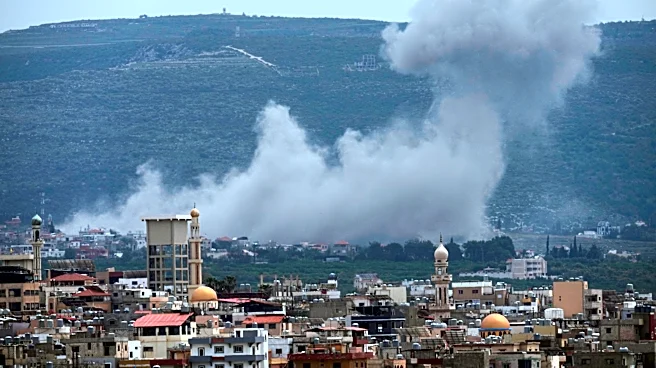
This development follows a temporary ceasefire mediated by the U.S. between Israel and Lebanon, allowing commercial vessels to navigate the Strait of Hormuz. The resumption of exports is a significant step for Iraq, as the Strait is a critical chokepoint for global oil shipments. The tanker had previously attempted to enter the waterway but was delayed due to the ongoing tensions in the region.
Why It's Important?
The resumption of oil exports from Iraq is crucial for the global oil market, particularly given the strategic importance of the Strait of Hormuz, through which a significant portion of the world's oil supply is transported. The halt in exports had potential implications for global oil prices and supply chains. The reopening of the Strait under the ceasefire agreement temporarily alleviates concerns over supply disruptions. However, the situation remains fragile, with geopolitical tensions in the region posing ongoing risks to stability and security in global energy markets.
What's Next?
With the ceasefire in place, Iraq is expected to continue its oil exports, but the situation remains volatile. The international community will be closely monitoring the developments in the Strait of Hormuz, as any escalation could lead to renewed disruptions. The U.S. and other stakeholders may engage in further diplomatic efforts to ensure the stability of this critical maritime route. Additionally, oil market participants will be watching for any changes in the geopolitical landscape that could impact supply and prices.