


What's Happening?
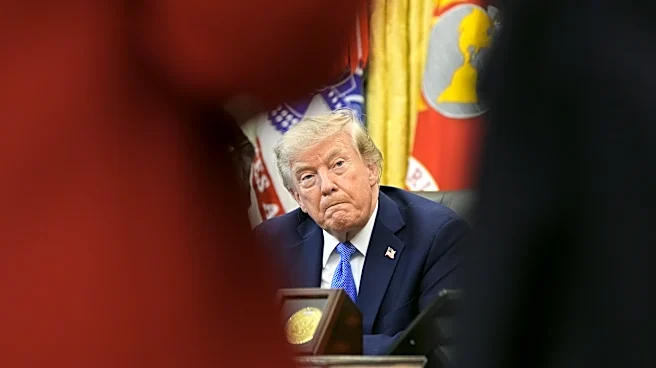
President Trump has publicly defended War Secretary Pete Hegseth following reports that accused Hegseth of misleading the President about the state of the U.S. arms stockpile. The controversy arose after a Washington Post report suggested that Trump had
confronted Hegseth during a Cabinet meeting at Camp David, expressing frustration over munitions shortages that could impact military operations in Iran. Trump, however, dismissed these reports as false, asserting that the U.S. has ample munitions and that defense companies are expanding production. The White House and Pentagon have both denied the allegations, with press secretary Karoline Leavitt labeling the report as "B.S." and Pentagon spokesman Sean Parnell calling it "fictional." Trump reiterated his support for Hegseth, describing him as highly respected within the military and credited him with significant improvements, including increased recruitment.
Why It's Important?
The defense of Pete Hegseth by President Trump highlights the ongoing tensions and challenges within the U.S. military's leadership during a critical period of conflict with Iran. The allegations of munitions shortages, if true, could have significant implications for U.S. military readiness and strategic capabilities. The situation underscores the importance of accurate communication and transparency within the defense establishment, especially during wartime. The President's strong backing of Hegseth suggests a desire to maintain stability within the Pentagon's leadership, despite external pressures and criticisms. This development also reflects the broader political dynamics at play, as Trump seeks to project confidence and control over military affairs amid a contentious international conflict.
What's Next?
Moving forward, the focus will likely be on addressing the reported munitions shortages and ensuring that the U.S. military is adequately equipped to handle ongoing and future conflicts. The Pentagon may face increased scrutiny from Congress and the public regarding its handling of military resources and transparency in reporting. Additionally, the administration's response to these allegations could influence public perception and political dynamics, particularly as the midterm elections approach. The situation may also prompt further discussions on the U.S. defense industrial base and the need for strategic investments to bolster military capabilities.