




What's Happening?
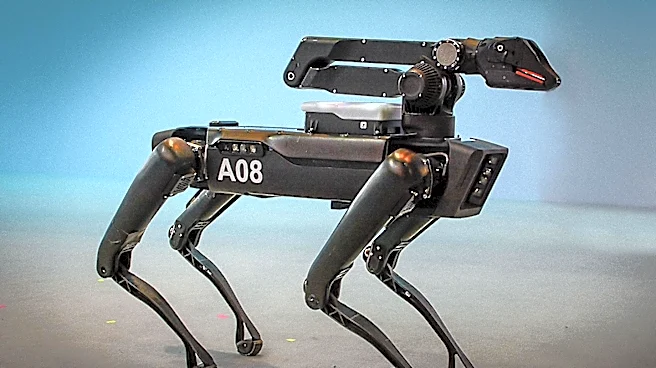
Ukraine has significantly increased its reliance on ground robots for critical frontline tasks, including logistics, medical evacuations, and direct attacks on Russian positions. The country has contracted over 22,000 ground robots for 2026. The Defense
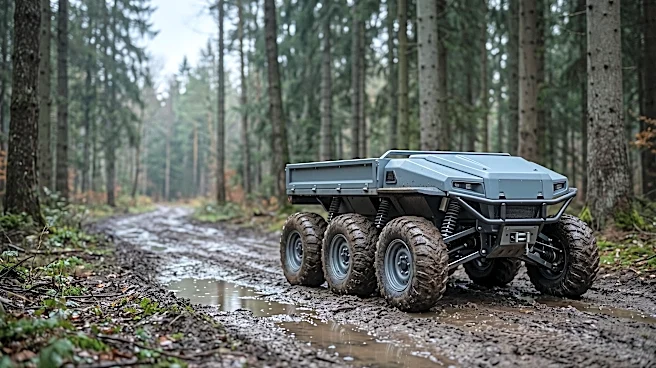
Procurement Agency (DOT) initiated its first competitive tenders for these robots in August, aiming to scale up supply. However, Viktor Pavlov, an officer with Ukraine's UGV School, has raised concerns that the current procurement model, which prioritizes the lowest price among products meeting technical requirements, may lead to the acquisition of less reliable or innovative machines. He argues that this approach could disadvantage proven designs and encourage the production of cheap copies over robust, field-tested equipment. Ground robots are now handling dangerous missions, such as transporting supplies through hazardous zones and evacuating wounded personnel from areas too risky for humans. A Ukrainian manufacturer, Frontline Robotics, known for aerial systems, is also developing a six-wheeled unmanned ground vehicle (UGV) named 'Frodo' for logistics, evacuation, and strike missions, featuring adaptive independent suspension for difficult terrain.
Why It's Important?
The widespread adoption of ground robots by Ukraine marks a significant evolution in modern warfare, demonstrating a shift towards unmanned systems for tasks traditionally performed by human soldiers. This innovation has the potential to reduce casualties, enhance operational efficiency, and enable missions in environments too dangerous for human intervention. The procurement challenges highlighted by Pavlov are crucial for the long-term effectiveness of Ukraine's robotic forces. If the tender process favors cheaper, less durable robots, it could compromise mission success, increase maintenance burdens, and ultimately undermine the strategic advantage gained from these technologies. The development of versatile UGVs like 'Frodo' by established drone manufacturers indicates a broader trend of integrating advanced robotics across different domains of military operations, potentially setting new standards for future conflicts and influencing defense strategies globally. The experience gained by Ukraine in rapidly deploying and adapting these technologies could offer valuable lessons for other nations, including the U.S., in developing their own robotic warfare capabilities and procurement strategies.
What's Next?
Ukraine's Defense Procurement Agency will likely continue its competitive tenders for ground robots, and the feedback from officers like Pavlov may influence future adjustments to the procurement process. There could be a push for a more nuanced evaluation system that balances cost with proven field performance, reliability, and innovation. The ongoing development and deployment of new UGV platforms, such as Frontline Robotics' 'Frodo,' will continue, with an emphasis on testing and refining their capabilities in real-world combat scenarios. Ukraine's military will likely further integrate these ground robots into combined operations, leveraging their capabilities alongside aerial drones and electronic warfare systems. The international defense community, including NATO, will closely observe Ukraine's experiences, potentially incorporating lessons learned into their own doctrine and procurement strategies for unmanned ground systems. The debate over procurement methods will continue, with a focus on ensuring that the drive for cost-effectiveness does not compromise the quality and effectiveness of critical military hardware.
Beyond the Headlines
The rapid integration of ground robots into Ukraine's military operations highlights a broader ethical and strategic shift in warfare: the increasing automation of dangerous tasks. While this reduces human risk, it also raises questions about the future role of human soldiers, the potential for autonomous weapons systems, and the implications for international humanitarian law. The tension between rapid innovation and rigorous procurement processes, as seen in Ukraine, underscores a fundamental challenge for modern militaries: how to quickly adopt cutting-edge technology while ensuring its reliability and effectiveness. This situation could lead to a re-evaluation of traditional defense acquisition models, potentially favoring more agile, iterative development cycles. Furthermore, the proliferation of diverse, locally developed ground robots in Ukraine suggests a decentralized approach to military innovation, which could inspire other nations to foster similar ecosystems of defense technology development, moving away from reliance on a few large contractors. The long-term impact on military doctrine, training, and the global defense industry will be profound, as nations grapple with the implications of a roboticized battlefield.