






What's Happening?
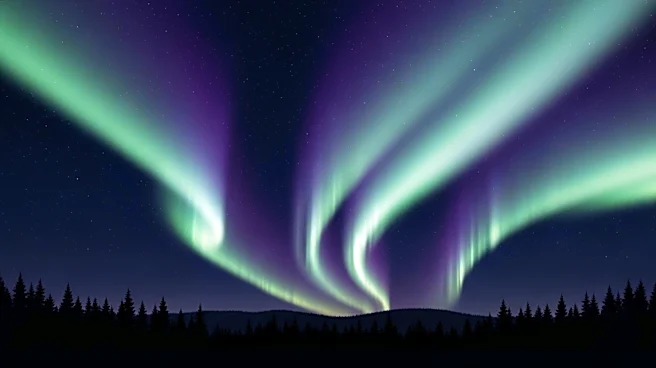
The National Oceanic and Atmospheric Administration (NOAA) has announced that the northern lights, also known as aurora borealis, will be visible in several U.S. states on the nights of May 14 and 15. This natural phenomenon occurs when electrically charged
particles from the sun collide with gases in Earth's atmosphere, creating colorful displays in the sky. The geomagnetic activity responsible for the auroras is expected to peak between 11 p.m. and 2 a.m. local time, potentially allowing the lights to be seen further south than usual. States such as Washington, Idaho, Montana, North Dakota, Minnesota, Michigan, and Wisconsin may have the opportunity to witness this spectacle, depending on the intensity of the geomagnetic storm and local weather conditions.
Why It's Important?
The visibility of the northern lights in the U.S. is a rare and exciting event for residents in the affected states, offering a unique opportunity to experience one of nature's most stunning displays. This occurrence highlights the dynamic interactions between solar activity and Earth's magnetic field, providing scientists with valuable data on geomagnetic storms and their effects. For the public, it serves as a reminder of the beauty and complexity of natural phenomena, encouraging interest in astronomy and atmospheric sciences. Additionally, the event may boost local tourism as enthusiasts travel to optimal viewing locations.
What's Next?
As the geomagnetic activity continues through May 16, NOAA will provide updated forecasts to help viewers plan their observations. Residents in the affected states are advised to find dark areas away from city lights for the best viewing experience. Apps and online resources are available to track aurora forecasts based on location, ensuring enthusiasts can maximize their chances of witnessing the northern lights. The ongoing study of auroras contributes to a better understanding of space weather and its potential impacts on technology and communication systems.